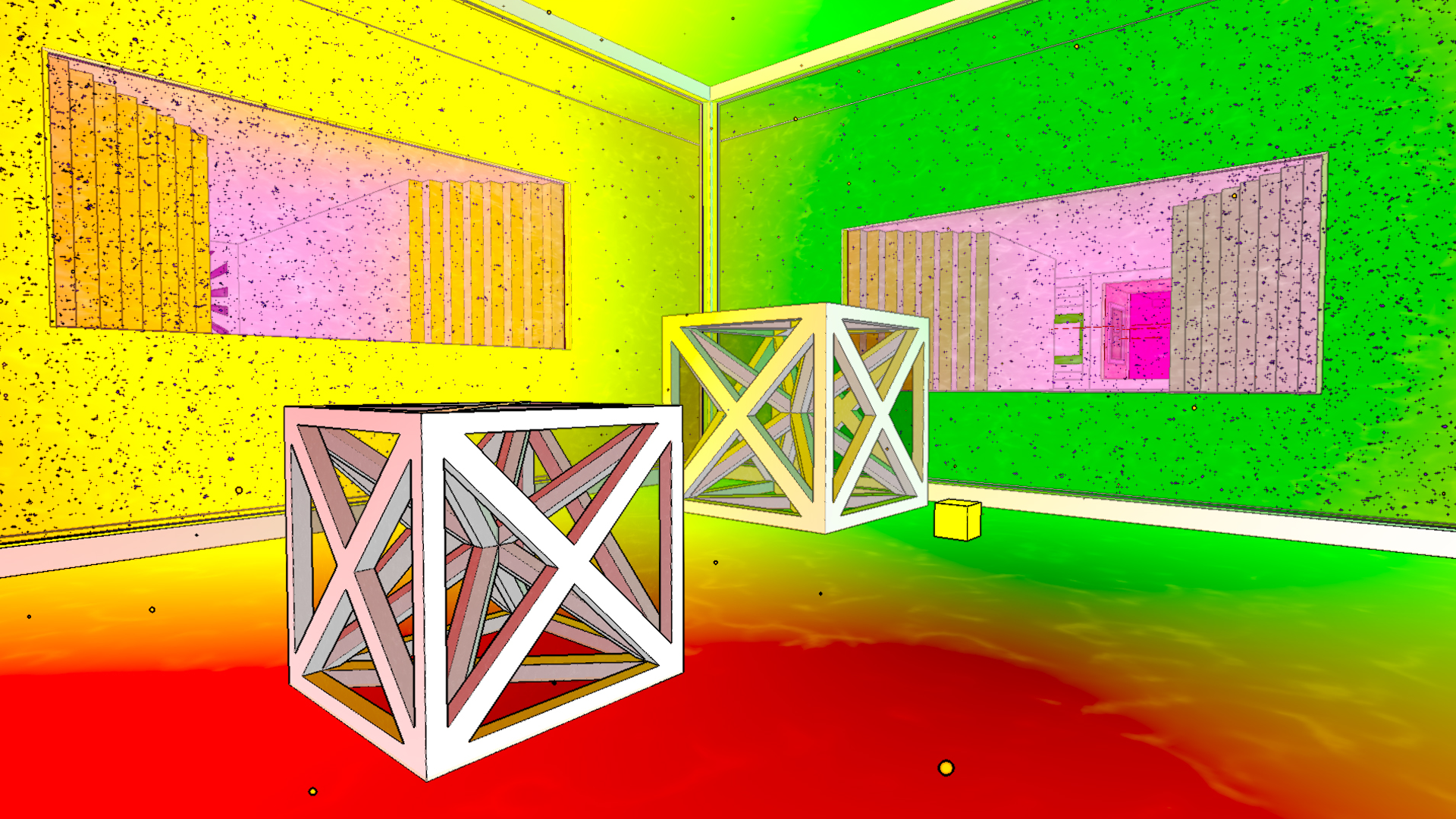
Antichamber Advanced Mechanics Guide
Master Antichamber with expert tips on non-Euclidean geometry, perspective tricks, block tools, gun upgrades, and secret paths.
Antichamber has a knack for turning your expectations inside out, forcing you to rethink the rules with almost every step. Just when you think you’ve wrapped your head around non-Euclidean spaces and oddball puzzles, the game throws in more layers, deeper mechanics, and a set of tools that seem to behave differently each time you use them. It’s a game that rewards curiosity but also demands an understanding of how its systems work beneath the surface. The more you experiment, the more you realize how much there is to learn—especially when it comes to mastering those colorful guns and manipulating the world itself in ways that aren’t always obvious at first glance.
Non-Euclidean Geometry Guide
Non-Euclidean geometry sits at the very core of Antichamber’s design. If you’ve ever felt that a hallway shouldn’t twist like that, or a door shouldn’t return you to where you began—then you’ve already met the concept, head-on. While most games stick to the rules of "real-world" space, Antichamber bends and breaks those rules constantly. Understanding how this works (and why your instincts might betray you) can make the difference between getting stuck for hours and finding your way through with confidence.
What Does “Non-Euclidean” Mean in Antichamber?
Euclidean geometry is the one you probably learned in school—think flat graph paper, rules about parallel lines, and shapes behaving as you expect. Antichamber, on the other hand, plays with a geometry that ignores these expectations. Rooms connect in impossible ways. Spaces loop back on themselves. Moving through a door can lead you somewhere new, even if you turn around and try to go back the same way.
A simple example: In Antichamber, you might travel down a hallway, take a left, and find yourself in a spot that, by all logic, is impossible to reach through normal architecture. Sometimes, retracing your steps doesn't bring you back to where you began. This isn’t just a visual effect—it’s a real change to how the game’s world is structured.
Core Non-Euclidean Tricks to Watch For
1. Impossible Hallways & Stairs
Corridors might connect to different locations depending on the direction you’re walking. Antichamber often changes destinations based on your movement or actions. Going forward might take you to one spot, but turning around and walking the same path sends you somewhere completely different.
2. One-Way Spaces
Some rooms only exist when approached from a certain direction. If you walk through a doorway and then turn around, the space you just came from might have morphed, vanished, or been replaced by something brand new. Pay attention to subtle cues—like a change in lighting, color, or sound—that signal you’ve crossed an invisible threshold.
3. Recursion and Loops
You’ve probably experienced a maze or two where looping back always puts you at the start. In these moments, Antichamber is actively rewriting the rules every time you cross a certain line. Some areas seem endless, but the solution may involve changing tactics, such as walking backward or refusing to follow the most obvious route.
4. Conditional Environments
Some puzzles depend on how you behave—if you walk slowly, a path appears; if you rush, it disappears. The environment constantly checks for small changes in your actions, altering geometry based on what you’re doing or how you’re looking around.
How to Think in Non-Euclidean Terms
Instead of expecting spaces to connect in a logical, predictable way, start paying attention to:
- Your Movement: Sometimes what matters is not just where you’re headed, but how you get there. Walk, look, and even wait patiently—these can all change outcomes.
- Directionality: Remember which way you enter a space. Returning the same way might yield inconsistent results.
- Environmental Cues: The game loves to drop small hints. Watch for changes in color, signage, or even the subtle hum of the environment to know if the space around you has shifted.
- Experimentation: When something doesn't make sense, it’s often a hint to try something weird. Go backward instead of forward. Approach a puzzle while looking down. Walk through a door sideways. The unexpected can open new paths.
Notable Non-Euclidean Rooms and Puzzles
“A Jump Too Far”
At first, it looks like a simple leap down a shaft, but as you move, pay attention to each landing. Sometimes, the space changes heights or shifts the room entirely, even though it looks identical. If you feel lost, try reversing your route and see what changes.
“The Chase”
This sequence flips expectations by altering directionality. Moving toward an exit may close it, but backing up—literally walking away—opens the way forward. These challenges encourage you not just to move through space but to question every step.
“Don’t Look Down”
This puzzle builds on your expectation that rooms connect as normal. Often, shifting your gaze—up, down, or even backward—alters the environment in ways that can open new paths or change room layouts.
Mindset Tips for Non-Euclidean Worlds
- Question Reality: If something feels off, you’re probably on the right track. Don’t fight the weirdness; use it.
- Repeat and Retrace: Sometimes, success means re-entering a room multiple times from different angles.
- Stay Observant: Minute changes in scenery can signal bigger shifts.
- Think Beyond the Room: The solution might require you to interact with a space in a way you haven’t tried before.
Wrapping Up the Impossible
Antichamber’s non-Euclidean geometry is more than a party trick—it’s the foundation of nearly every puzzle. The sooner you trust that the world’s logic is designed to break your habits, the more impressive your progress will feel. Pay close attention, try things that make no sense, and remember: in Antichamber, there’s no such thing as a “normal” hallway or door.
Perspective Guide
Antichamber constantly challenges how you expect to see and understand its spaces. Perspective plays a huge part in its puzzle design—sometimes, fixing your gaze in the “wrong” direction can mean hours spent missing the solution that was right in front of you. This section breaks down why perspective matters, how it shapes the world, and tips for making the most of this brain-bending tool.
Why Does Perspective Matter in Antichamber?
In most games, what you see is just a reflection of where you are. In Antichamber, perspective and vision are often a trigger for changes in the environment—sometimes subtly, sometimes dramatically. The simple act of turning your head or looking a certain way can open doors, rearrange rooms, or reveal hidden pathways.
The game often rewards curiosity with shifting stairwells, passages that didn’t exist a moment ago, or entire rooms that transform depending on how you look at them (literally). It’s not rare to walk toward a blank wall, shift your camera, and suddenly realize that an exit has materialized. Put simply: what you see and how you look directly affects how you can move forward.
Common Perspective-Based Mechanics
1. Doors and Pathways That Rely on Line of Sight
Some doorways only open when you’re not looking at them—or sometimes, only when you are. For example, a door might close as soon as you approach, but if you back through it while looking away, it stays open. In other areas, platforms may disappear as soon as you lay eyes on them, turning faith (and your camera angle) into necessary tools for progress.
Tip: Experiment with walking backward, side-stepping, or turning your view away from suspicious objects and doors. If a path seems impossible, keep your focus elsewhere and try again.
2. Color-Coded Perspective Triggers
Certain puzzles depend on color cues visible only from specific angles. A wall may look solid and unremarkable from one side, but a hidden pattern or gap reveals itself from another. Sometimes, floor arrows or illuminated hints only show up while facing a certain direction, directly channeling you toward the solution—if you notice them.
Tip: When stuck in a puzzle room, circle it and check corners from multiple vantage points. Don’t trust that a wall or floor is the same from every side.
3. Moving Objects With Your Gaze
Later in the game, you’ll find some puzzles react to your direct stare. A cube or platform may move or freeze depending on whether you’re watching it. Other times, a path may slowly assemble as you look, but collapses when you walk toward it. These moments reinforce that your viewpoint is a puzzle piece all its own.
Tip: Watch for environments that feel like they’re “watching back.” Test what happens when you stand still, glance away, or even walk through a room with your camera locked in place.
4. Art and Optical Illusions
Occasionally, the solution is not in changing the world, but in changing how you view an arrangement of parts. Some rooms include impossible shapes or lines whose purpose only becomes clear from one spot. Patterns on the wall might mean nothing until viewed from a certain height or through a window, snapping into focus as a clue or code the moment you find the correct perspective.
Tip: If something in the environment feels off or unfinished, ask yourself: “What would this look like from another angle?” Shift your position, crouch, or jump for a new point of view.
Key Examples of Perspective-Driven Puzzles
“A Matter of Perspective”
Early in the game, there’s a space with two exits—one black, one white. Your choice seems obvious, but shifting your focus back and forth causes the layout to morph. Can’t find the hallway you just saw? Reset your gaze, look at it from a new angle, or walk backward—the route may reappear.
Hallways That Aren’t There… Until You Look Away
Another recurring trick involves invisible passageways. You’ll see a wall with no opening—until you turn around or look through glass or a hole. Some transparent barriers make a path obvious from one side and invisible from another. Walking into what looks like a wall can sometimes bring you to a new room, depending on what’s in your line of sight.
The “Don’t Look Down” Room
A famous example is a hall that only lets you progress when you refuse to look down—or in some cases, the ceiling triggers a shift. Here, your camera direction is directly tied to a puzzle’s logic, showcasing how “seeing” shapes what exists.
Practical Tips for Mastering Perspective
- Rotate Often: If you hit a dead end, spin your camera 360 degrees. Look up, down, and behind you.
- Backtrack Visually: Sometimes, progress happens when you double back while keeping your eyes focused ahead or away.
- Embrace “Wrong” Views: The game’s best secrets are sometimes just out of sight—literally. Try to see things from the “wrong” angle.
- Map Mental Landmarks: Since rooms can shift or transform, keep track of unusual symbols or art. Later, viewing these from other spots might flip an “unsolvable” puzzle on its head.
- Patience Over Panic: When something doesn’t add up, pause. Sometimes, the game wants you to stand still and change your viewpoint slowly.
Conclusion: Training Your Eyes and Your Mind
Antichamber isn’t just about moving from place to place—it’s about thinking with your eyes as well as your feet. Perspective is often the unlock for puzzles that appear impossible. By staying curious and open to unusual camera angles, you turn your gaze into the ultimate tool for escaping Antichamber’s mind-bending spaces. Remember: In this game, sometimes seeing is changing.
Block Manipulation Guide
Once you start picking up colored guns in Antichamber, the world’s rules bend a little more. Suddenly, you’re not only twisting your brain around impossible geometry and shifty perspective—you’re also learning to control matter itself, one colored cube at a time. Block manipulation opens up whole networks of puzzles, teaching you to think in terms of removal, movement, multiplication, and even automation.
This section will walk you through the mechanics behind each block gun, how their abilities work, and the advanced tricks that let you bypass what look like hard limits. If you ever felt stumped by a wall of stubborn cubes or a stubborn hallway that sucks away your collected blocks, these breakdowns are for you.
The Four Block Guns: Basics and Progression
There are four colors of guns in Antichamber: Blue, Green, Yellow, and Red. Each upgrade layers in more capability. Here’s how it plays out:
Blue Gun – The Fundamentals
The blue gun is your intro to block puzzles. Here’s what you can do:
- Pickup: Aim at a blue cube, hold left-click, and it slides into your gun if you’re close enough.
- Place: Aim at an open space near a wall or edge, right-click, and your held cube pops out in a neat little stack.
With just the blue gun, you’re limited to moving a block one-at-a-time. You can grab blocks the level designers left out for you, but anything already part of the architecture—like a blue cube holding up a vital bridge—is stuck fast. If you see a field of cubes, you can only move the single ones dotted around.
Tip: Use the blue gun to build simple stairs, depress pressure plates, or create blocking walls against lasers or moving platforms.
Green Gun – The Multi-Grab
The green gun changes your whole workflow:
- Pickup: Hold left-click and drag across several connected green cubes. If they’re all loose, they’ll move together—no tedious one-by-one work.
- Place: Like the blue gun, but now you can right-click to deposit big groups at once.
Green cubes open up puzzles requiring quick construction or pressure plates demanding stacks of blocks. Remember, if a block is “anchored” in the environment (not loose), you still can’t move it.
Trick: Try building towers by placing several blocks in a column. If you’re careful, you can even reclaim most of your cubes after using them.
Yellow Gun – Pulling and Pushing
The yellow gun outpaces the green by letting you draw cubes in straight lines—even through tight spaces.
- Pickup: Hold left-click over an edge cube, and drag. Any loose yellow blocks in a continuous line (horizontally or vertically) come with you, no fiddling with clusters.
- Place: Drag your cursor while holding right-click, and you’ll place a string of blocks in one motion.
This means you can build bridges across gaps or sneak cubes around corners more efficiently. Some puzzles exploit this by hiding spaces you can only fill with line-drawn cubes.
Efficiency Tip: Use the yellow gun to “snake” cubes behind walls or through puzzle screens when only a thread-width line can get something moving.
Red Gun – Multiplication and Automation
This gun feels like breaking the game’s own rules. You get:
- Pickup: The same as yellow, but more powerful.
- Place: If you right-click and hold over a “seeded” group of red blocks, they will multiply, expanding as long as there’s room and you have cubes left.
Red cubes reset block puzzles: they multiply on contact with empty spaces, helping you fill massive voids or build bridges at a ridiculous pace. Some late-game rooms rely on this gun, letting you fill large puzzles in a flash.
Warning: Multiplication drains your supply of red cubes quickly—keep an eye on your ammo or you’ll lose the seeds needed to keep multiplying.
Block Fields and Limitations
Keep an eye out for purple or black fields. These act like fences: blocks can’t pass through, and any cubes hitting a forcefield vanish. Some puzzles require you to think about how to move blocks around or above these obstacles, using the walls and your available resources wisely.
If a block puzzle seems impossible, check all the nearby walls and ceilings—sometimes there’s a small gap or ledge you can use to sneak blocks past a barrier.
Advanced Block Tactics
Here’s where you get clever. Antichamber rewards patience and weird ideas:
1. Cube Cycling
If you can’t bring enough blocks through a puzzle, look for ways to recycle. Place cubes on a pressure plate, quickly walk through the newly opened door, then snatch your cubes back before the plate resets. Time it right, and you won’t lose any blocks.
2. Puzzle “Priming”
If a plate needs a tower of blocks, build a temporary staircase, walk up high, and reclaim cubes from below. You gain vertical height without burning through your whole stash.
3. Managing Ammo
You can only hold so many blocks at once: each colored gun has its own cap. When you see a room full of cubes, consider grabbing as many as you can and moving them before solving the next step. Efficient block movement gives you an edge.
4. Block Propagation Loops
With the red gun, it’s possible (and often necessary) to initiate a “grow” command that fills an entire room or creates a solid bridge. To multiply efficiently, build along walls and ceilings to stretch your supply further—you’ll be surprised how far you can go with careful placement.
Puzzle Examples
The Multi-Pressure Plate Challenge
A row of plates, all needing to be pressed at once. Think: Can you build a horizontal line with your gun of choice? Yellow and red guns are ideal for laying down bridges in a single motion. With blue or green, you’ll have to move fast to avoid plates resetting.
The Single-Block Passage
A section where you’re forced to relinquish all but one cube. Plan carefully: use that single cube to reach higher ledges by placing it, standing atop, and reclaiming. Creativity turns a humble block into a useful tool.
The Cube Extraction Test
Puzzles sometimes place blocks behind glass or just out of reach. Look for wall gaps, ceiling holes, or creative angles where the gun’s range lets you “thread the needle” and snag a cube without crossing a deadly field.
Quick Tips for Block Success
- Practice Motion: Learn to quickly click and drag groups, especially in tricky yellow and red puzzles.
- Watch Out for Loss: Never shoot blocks through purple fields—gone for good!
- Count Your Supply: Know how many cubes you have left before tackling tougher rooms.
- Patience Pays: If it feels impossible, leave and return later—sometimes a more advanced gun is the answer.
Wrapping Up Block Manipulation
Antichamber’s block manipulation isn’t just a set of mechanics—it’s a unique logic test that builds on itself with every colored gun upgrade. Learning each tool’s quirks and mastering advanced movement saves you from endless backtracking and stuck moments. When you treat every cube like a potential asset (and see every gun as a shortcut in disguise), the game’s trickiest block puzzles turn into satisfying moments of “I knew I could do that!”
With persistence, a willingness to try oddball ideas, and a steady hand for cursor control, the block mechanics in Antichamber become some of the most rewarding puzzles in the game. Keep experimenting—you’ll be surprised at what cubes (and clever thinking) can get you.
Gun Upgrade Guide
Progress in Antichamber follows your ability to get new block “guns,” which unlock deeper layers of the labyrinth. The game doesn’t order these upgrades for you, and it rarely explains what each gun can do. Here’s a clear look at where to find each upgrade, what changes with every step, and practical advice for when—and how—to use them.
The Four Guns: Overview
You start with empty hands. Then, bit by bit, you gain the power to move, multiply, and manipulate blocks with four color-coded upgrade guns:
- Blue Gun: Basic block pickup/place
- Green Gun: Pull lines, place lines (continuous block movement)
- Yellow Gun: Advanced “snake” movement—dragging lines around corners
- Red Gun: Multiplication/Growth and mass block control
Let's break down exactly how (and where) to snag these upgrades.
Where to Find Every Gun Upgrade
Antichamber hides each new gun behind a puzzle wall. Your path isn’t always obvious, but there is a general sequence most players follow.
Blue Gun – Your First Tool
- How to Get It: From the central hub, take the route marked “Leap of Faith” (a staircase in the main room). Follow the paths and complete some basic puzzles. Eventually, you’ll reach a chamber with a floating blue gun after solving a “cube door” room.
- What It Does: Grab single blue blocks and set them down, one at a time.
- Best Use: Entry-level block puzzles and learning basic movement.
Tip: The blue gun is a stepping stone. Some puzzles will seem too hard with just this—don’t waste time if something looks impossible. Come back with a better gun.
Green Gun – The Line Handler
- How to Get It: Once you have the blue gun, look for rooms where you can't finish because the cubes are locked into lines or patterns. Early in the maze, the “A Jump Too Far” or “The Highest Point” rooms will subtly guide you towards the green gun. It’s behind a puzzle that requires snatching a whole line of cubes.
- What It Does: Lets you grab whole lines, not just single cubes. You can pull “strands” of blocks, so you don’t have to move one at a time.
- Best Use: Bridges, towers, and anytime you need more than one block in a hurry.
Yellow Gun – The Snake Master
- How to Get It: This upgrade requires advanced trickery. After getting the green gun, progress through “The End” or “Just a Little Bit Further”. Look for a room that teaches you to pull cubes through tiny slots—you’ll need line techniques and clever block placement. Once through, you’ll see the yellow gun floating, often behind a glass pane.
- What It Does: Allows you to drag connected lines of cubes through corners and tight spaces, and lets you place lines in a single motion.
- Best Use: Solving puzzles where manipulation through awkward pathways is needed, targeting plates from a distance, and reaching otherwise inaccessible locations.
Efficiency Tip: Practice threading long lines through cracks and connecting pressure plates around corners with minimal cubes.
Red Gun – The Game-changer
- How to Get It: This is the final upgrade. After completing several mid- to late-game puzzles with the yellow gun, follow paths leading to “Connecting the Pieces”, “Above All Else”, or “A Sign of Things to Come”. You’ll reach a room with tricky block puzzles and pressure plates. The last chamber will finally reward you with the red gun.
- What It Does: Lets you multiply cubes. Not just move them—hold and right-click over “seeded” blocks and watch them expand to fill a shape, as long as you have ammo.
- Best Use: Filling huge areas, stacking massive towers, and reaching the game’s wildest endgame puzzles. Feels overpowered, but the ammo drain means you need to ration your supply.
Warning: Using the red gun on big rooms can empty your cube stash in seconds. Always check if you need cubes for another part of a puzzle before going wild.
Gun Progression: Why Upgrade Matters
Getting a new gun isn’t just about more power—it’s about access. Certain doors, puzzles, and secret paths can't be passed without the corresponding gun. Many rooms “loop back” to earlier locations, so if you hit a dead end, look for alternate paths now open with your new upgrade.
The blue gun teaches fundamentals. Green unlocks speed and efficiency. Yellow brings finesse into play. And red lets you tackle puzzles once thought impossible.
Puzzle-Solving Advice for Each Gun
- Blue: Take your time; precision matters. Watch for puzzles teaching patience.
- Green: Practice moving lines quickly. Perfect for pressure plate races and high bridges.
- Yellow: Use snake movement for hard-to-reach targets. Sometimes “spilling” cubes around barriers beats brute force.
- Red: Multiply only as much as needed! Get in the habit of cleaning up after yourself and checking your supply often.
Returning for Secrets and Completion
Don’t skip old puzzles. After getting a better gun, revisit places that stumped you—side rooms, high ledges, even off-path doors. What looked impossible before becomes trivial with something like the yellow or red gun in your hands.
Common Misconceptions
- You don’t have to finish rooms in order. Sometimes the shortest route to a gun is via an odd detour.
- Missing a gun? Double-back to older puzzles, especially where groups or lines of blocks were untouchable with your previous tool.
- Stuck with no cubes? Look for respawning blocks or return to earlier rooms to replenish your supply.
Conclusion
Antichamber’s guns are keys that break open the game’s toughest challenges. Knowing where each gun is, what it does, and when to return to solved and unsolved puzzles gives you a major advantage. Experiment freely with new abilities—each upgrade changes how you see every room, and the joy comes not just from solving new puzzles, but from surprising yourself with clever rewiring of old ones.
Hidden Path Guide
Antichamber loves secrets. Its Escher-like corridors are packed with invisible routes, one-way doors, and shortcuts hidden behind what looks like empty space. Some hidden paths are crucial for upgrades or reaching the next puzzle. Others lead to collectible messages, alternate solutions, or just shortcuts that can save a lot of time. This guide breaks down how to spot, unlock, and use hidden paths throughout the game.
Understanding Hidden Paths
First, Antichamber uses visual trickery. Sometimes a wall isn’t really a wall, or a hallway is only visible from one angle. Other times, paths appear after solving a puzzle, or only become accessible once you have a certain gun. Don’t trust your memory of the map—new routes appear where there were dead ends before, so curiosity pays off.
Types of Hidden Paths
- Illusion Walls: Plain walls that you can actually walk through. Sometimes they flicker, have a different shade, or even a faint buzzing sound.
- Perspective Gaps: Hallways or doorways that exist only when standing in a certain spot. Move away and they vanish.
- One-way Drops: Shafts or ledges you can jump down, but can’t climb back up until you loop around.
- Disappearing Platforms: Bridges or steps that show up after you trigger switches or solve a puzzle elsewhere.
- Teleporter Tricks: Some portals or exits return you to subtle new locations in the hub. Look for small changes after using teleporters.
How to Spot Hidden Paths
Watch for Out-of-Place Details
- Wall Texture or Color: A wall with slightly off colors or patterns usually isn’t just lazy art—it’s a clue.
- Sound: Some hidden halls have a faint hum, buzz, or the sound of rushing air. Stop and listen.
- Light and Shadow: Unusual lighting or harsh shadows sometimes hint at an open space behind.
Try Walking Into Dead Ends
Don’t just turn away from what seems to be a dead end. Walk up to it, keep pressing forward, or jump. You’ll be surprised how often Antichamber rewards stubbornness.
Use Gun Abilities
Some secret routes only open if you remove specific blocks. You might need the green or yellow gun to pull out a stack, revealing an opening that was invisible with the blue gun. As you upgrade, revisit odd block arrangements or suspicious corners in previously cleared rooms.
Notable Hidden Paths (Spoiler Warning)
Here’s a breakdown of some classic locations and their secrets. Skip these if you want to hunt for everything on your own.
“A Wall Without Meaning”
Near this message, a plain wall hides a hallway that runs parallel to your path and drops you halfway through another puzzle, letting you skip part of the room. If you see a wall that seems out of place, walk straight at it.
“The Other Side”
There’s an early area where you look through a glass pane and see a door you can’t reach. Once you get a better gun, head back and examine the corners—one section of glass is actually an invisible passage.
The “Impossible Hallway”
Some sections twist so you walk in a circle, but breaking that loop (by stepping slightly off-center or jumping) shifts your surroundings. If a room seems endless, try changing direction or hugging the walls.
“Stairway to Nowhere” Shortcut
Rooms filled with stairs often contain hidden ledges or even empty air you can walk on. Hold forward while tracing the edge—you might find a shortcut to a new area, or a message tucked away.
Advice for Finding Secret Paths
- Experiment After Upgrades: Got a new gun? Go back to all the dead ends and weird walls you skipped. Many use colored cubes as plugs for hidden doors, especially green and yellow arrangements.
- Check the Map Often: Antichamber’s in-game map updates as you progress, but sometimes leaves hints about where unexplored or secret areas might connect.
- Test Odd Behavior: If two areas seem close, but the path between is missing, look for tricks in perspective or trick walls.
- Read the Whiteboards: The messages scattered around the world aren’t just philosophical—they often drop hints about nearby secrets or how to look for hidden paths.
Secrets Worth Finding
Not every hidden route is just a shortcut. Some lead to collectibles or unique puzzle solutions:
- Message Cubes: Some of the strangest philosophical quotes are hidden off the beaten path.
- Alternate Puzzle Solutions: Multiple hidden paths let you skip entire sections or solve puzzles in creative ways.
- Hub Shortcuts: There are a few hidden doors that bring you straight back to the main hub—very handy if you get stuck or want to change tactics.
Final Thoughts on Secret Paths
Antichamber’s hidden paths are like the ultimate reward for players willing to poke, prod, and question what’s in front of them. When in doubt, trust your instincts. Walls aren’t always walls. Spaces might twist as you turn. And every time you feel stuck, there’s probably a trick—often literal—right under your nose. Keep moving, stay curious, and those hidden corridors will start to reveal themselves one by one.