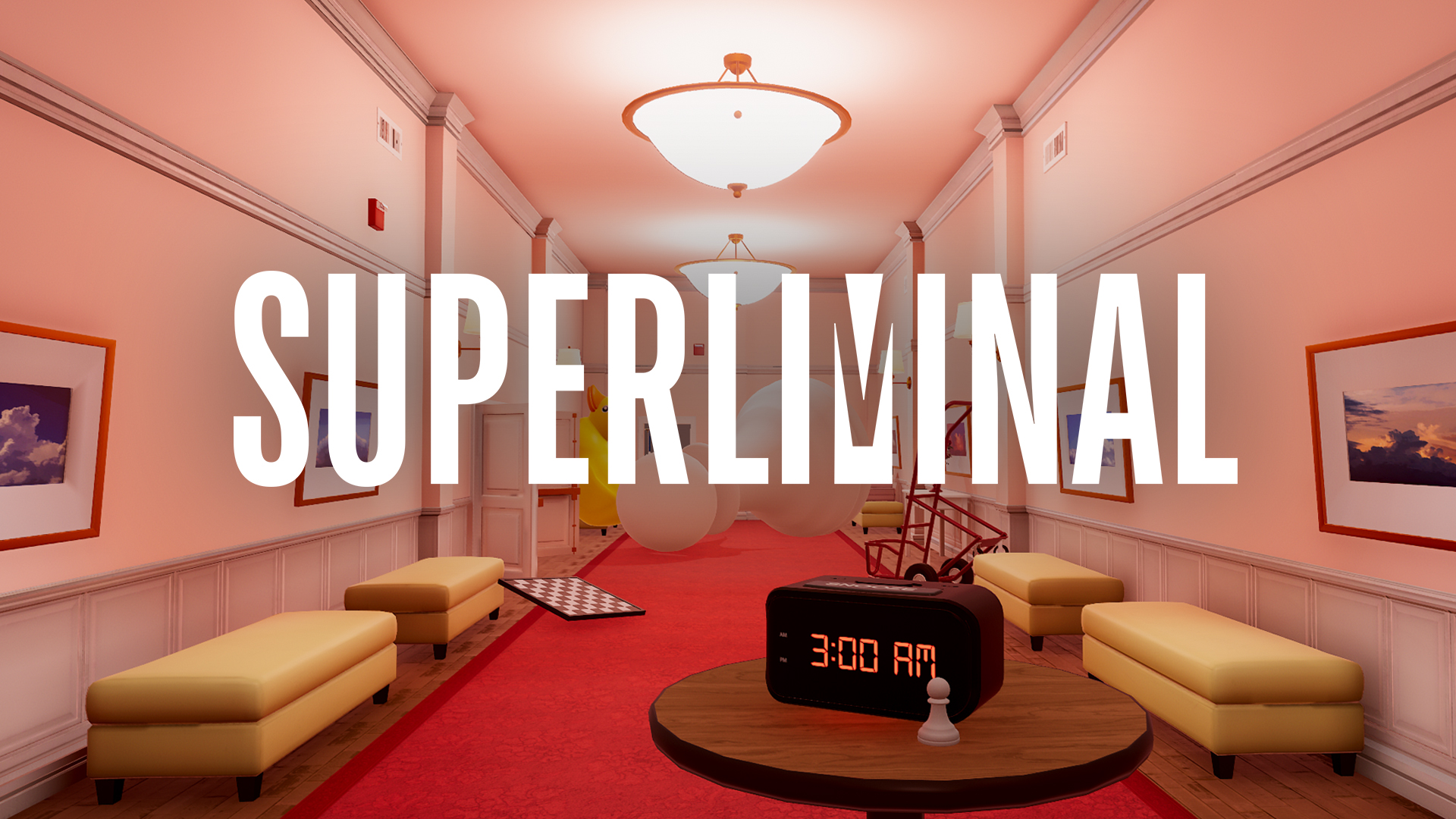
Superliminal Puzzle Solutions Guide
Master Superliminal’s mind-bending puzzles with expert tips on perspective, duplication, size tricks, illusions, and dream logic.
Superliminal is one of those games that quickly makes you question your sense of perspective—literally. Its puzzles take full advantage of optical illusions, shifting objects, and playing with scale in ways that most players haven’t seen before. That sense of wonder can also come with a fair bit of confusion, though, especially when it’s not clear exactly how to manipulate the world to your advantage. If you’ve found yourself staring at a door that just won’t open or debating which object to pick up next, you’re definitely not alone. Sometimes, all it takes to move forward is a fresh angle or a nudge in the right direction.
Understanding Forced Perspective in Superliminal
Forced perspective is the central mechanic in Superliminal and the foundation of nearly every puzzle you’ll face. The idea is simple but clever: objects you pick up can grow or shrink based on where you’re standing when you place them down. This relies on how the game interprets your viewpoint—it assumes an object appears to be whatever size it looks to be from your perspective, not its “actual” size in the world.
What Does That Mean in Practice?
Imagine holding a can of soda at arm’s length so it lines up perfectly with a distant door. If you drop it from that spot, Superliminal will make the can large enough to actually “touch” both your hand and the faraway door. The further you stand from something while looking at it, the bigger it becomes when you set it down. Get up close and it’ll shrink to appear small compared to what’s around it.
Core Forced Perspective Techniques
Getting comfortable with forced perspective takes a bit of a mind shift. Here are the basics you’ll need to wrap your head around:
1. Resizing Objects
- Making Objects Bigger: To enlarge an item, back away from the spot where you want to place it, then look up slightly so the object visually covers more space in the environment. When you let go, it balloons up to fill that apparent size.
- Making Objects Smaller: Get as close as you can to the drop target so the item takes up less visible space. Drop it, and it’ll shrink accordingly.
Experiment with both distance and angle to see how the object’s height, width, and depth change. Angling the item so it overlaps with distant features will make it even larger.
2. Placing Objects Precisely
Superliminal helps by giving you a shadow/outline where the item will land. This “ghost” image adapts as you move and turn. If you need to wedge a block between two ledges or balance something on a tiny button, watch that shadow closely.
Tips
- Line up the edge or corner of an object with a real-world element in the game.
- Move slowly, since a small change in your viewpoint can make a big difference.
3. Perspective Tricks
Sometimes you’ll need to use perspective in less obvious ways:
- Creating Stairs or Platforms: Need a higher viewpoint? Grab an object, back up, and grow it until it’s big enough to form a staircase or platform.
- Bridging Gaps: Increase an object’s size (like a block or chess piece) until you can walk across it to reach another area.
- Slotting/Blocking: Make something just the right size to fit into a puzzle “lock” or to block a sensor.
Tricky Forced Perspective Puzzles and How to Solve Them
Players often get tripped up by puzzles that seem to defy logic or require split-second changes in size. Here’s how to tackle the most common types:
Overcoming Height Barriers
A door’s out of reach or there’s a button high above. Try this:
- Grab the nearest movable object (blocks, dice, anything you can pick up).
- Back up until the object is huge compared to you.
- Drop it so it lands where you need a boost, then jump up.
If there’s still not enough height, try standing on the new object and resizing a second one.
Fitting Through Tight Spaces
Some spots require tiny versions of objects—or even yourself.
- Shrink items by dropping them at your feet.
- Sometimes, you’ll need to shrink something, carry it through a small opening, and then re-size it once you’re past the barrier.
Solving Perspective Art Puzzles
Occasionally, you’ll spot painted shapes (like a 2D wedge or cube) on the wall or floor.
- Stand in just the right place so the fragmented painting lines up and “becomes” a pick-uppable 3D object.
- These puzzles require patience—nudge your aim inch by inch until it snaps into place.
Advanced Tips for Forced Perspective
- Try every object: Many items that look stuck might actually be moveable. If in doubt, try picking up anything not bolted down.
- Check your angles: You aren’t limited to straight-on views. Look up, down, or sideways for alternate approaches.
- Use the environment: Walls, ceilings, and doorways can change the sense of scale dramatically.
Common Mistakes to Avoid
- Forgetting to resize: If you’re stuck, it’s often because an object is too large or too small. Remember to check both extremes.
- Holding down the interact button: Holding the object instead of dropping it doesn’t trigger resizing.
- Not aligning to the grid: Sometimes, being just slightly off-center can mess up precise placement.
Practice Makes Perfect
Forced perspective isn’t just a mechanic; it’s a mindset. Try experimenting in safe rooms where there’s no pressure—test how far an object can grow, or see how tiny you can make something. Soon, making mental leaps comes naturally, and Superliminal’s wildest challenges seem logical.
If you’re feeling stuck, take a deep breath and remember: it’s all about how you look at things. Sometimes, the solution is simply changing your point of view.
Object Duplication Guide
Object duplication is one of Superliminal’s sneakiest tools, and the game introduces its mechanics with little fanfare. Unlike resizing, duplication lets you create multiple copies of certain objects to solve puzzles that a single item alone couldn’t crack. Here’s how you can master this trick and use it to your advantage across the game’s trickier chambers.
How Object Duplication Works
Not every item in Superliminal is duplicatable. You’ll usually spot opportunities when the environment features recurring motifs—think simple cubes, painted apples, or objects that hover in a strange “transition” state. Often, duplicate-ready objects appear where a puzzle seems impossible with only one moveable item.
The game doesn’t hand you a button that says “duplicate.” Instead, duplication happens through a combination of perspective, environment cues, and trickery. The most common way is interacting with an “infinite source” object. These act like magic vending machines—grab one and another appears in its original spot. Sometimes you’ll duplicate objects by exploiting perspective puzzles: an image or shadow on a wall blooms into another pick-up, allowing you multiples where there was only one.
Key Duplication Strategies
1. Spotting Duplication Sources
- Object Recurrence: Areas where an object instantly reappears after you move it are a hint. For example, in the apple painting puzzles, taking the 3D apple causes another to “paint” itself back into place.
- Projection Objects: Sometimes, standing in just the right spot lines up a 2D projection on a wall or floor. When you interact at that precise angle, a copy forms.
- Clone Pedestals: Certain pedestals or dispensers spit out a fresh copy every time you pick one up.
2. Efficient Duplication
- Farm Multiples: Need a stairway of boxes? Grab the duplication-source item, then pick up its clone, and repeat as often as you need.
- Plan Placement: Objects can easily clutter the environment if you’re not careful. Set each duplicate down in an orderly stack or row to give yourself room.
- Angle for Utility: Remember, each duplicate can be resized like any regular object. Adjust the size of each before stacking for maximum reach or coverage.
3. Puzzle Applications
- Creating Custom Stairs: Most often, duplication lets you build makeshift staircases. Stack blocks or apples from smallest to largest for a reliable ascent.
- Weight Distribution: Multiple objects on pressure plates help open double doors or maintain several mechanisms at once.
- Accessing New Areas: It’s common to see puzzles where one block isn’t enough height or width to clear a gap, but four stacked together get you through.
Common Duplication Puzzles Explained
The Apple Room
The apple puzzles are classic Superliminal: apples start as fragmented art on the wall, which only turn 3D when you view them from the right angle. Pick one up, and the projection snaps back on the wall, ready for another pickup. Use this loop to quickly farm stacks of apples for stairs or platforms to reach high doors or buttons.
Dispenser Challenges
Face a wall-mounted button that produces cubes with every press? Use the duplicates strategically. Build a bridge, multitiered stair, or weigh down scattered switches in a single room.
Infinite Source Loops
You might encounter a room where every object returned to its starting position as soon as you look away or set it down. Leverage this by carrying as many objects as you need to the goal area, or resizing them uniquely to fill gaps and block sensors.
Tips for Mastering Object Duplication
- Don’t Overcrowd the Scene: Too many copies in one place can obstruct movement or knock over your carefully built stair.
- Be Mindful of Object Physics: Some objects roll or bounce more than others. Cubes are stable; apples and balls are slippery.
- Think Vertically: When stacking, make each object slightly larger than the one below so that you can actually climb the pile.
- Revisit Rooms for More Items: Don’t hesitate to backtrack if you realize you need one more duplicate.Try new viewpoints—sometimes a new path to duplication presents itself from another angle.
Troubleshooting Duplication Issues
Puzzle Not Progressing?
- Check if the source is actually infinite; some objects can only be duplicated a set number of times.
- If your duplicates vanish as you leave a room, try keeping everything within the current area.
Items Misaligned?
- Use perspective to correct shaky stacks. Walk to ground level and align foundations before building higher.
- If you topple your stair, resize new blocks bigger for a more forgiving climb.
Final Thoughts
Object duplication broadens your options in Superliminal, allowing inventive solutions beyond what a single block or stair can provide. Whether you’re building human-sized apple ladders or jenga towers of cubes, the secret is intention: grab only what you need, stay organized, and keep experimenting. When stuck, remember the rules aren’t always obvious—sometimes a wall painting or recurring object is all you need to multiply your way to victory.
Size Manipulation Guide
Playing with size isn’t just a neat party trick in Superliminal—it’s the backbone of many of the game's wildest puzzles. The illusion of depth, forced perspective, and how the game lets you stretch or shrink everyday objects is where the real “aha” moments come together. Here’s how size manipulation works, what to watch for, and some smart uses to help you breeze through tricky rooms.
The Core Principle: Forced Perspective
Superliminal’s main gimmick is that when you pick up an object, its size changes depending on how close or far you place it. Holding a small cube straight in front of your face and releasing it onto a table across the room? That block’s now the size of a car. Put it down by your foot instead? Tiny enough to fit in your pocket.
The game measures how big an object looks to you at the moment you let go, and makes that real. No matter how absurd it seems to stash a door-sized chess piece in your back pocket, it’s all about the illusion.
The Controls Behind Resizing
- Pick up an object: Left mouse button (PC) or corresponding button for your platform.
- Look up/down, forward/back: The farther away from you the drop point, the bigger the object becomes. The closer to you, the smaller it will be.
- Release/place: The object immediately snaps to its new size based on where you’re pointing when you let go.
No special resize buttons required—the game handles it all through your viewpoint and depth.
Size Tricks for Key Puzzles
Making Stairs from Nowhere
Need to reach a distant ledge? Take a box or cube, and try this sequence:
- Pick it up and back all the way up to create space.
- Look up at the ceiling, then pan your view to place the object across the room or over a gap.
- Release—the object grows!
- If you need a smaller stair first, put the block down near your feet, then pick it up again and “throw” it farther to enlarge.
Stack multiple, each a little bigger, to craft a stair you can climb.
Fitting Objects in Tight Spots
Sometimes you need to slip a key object through a gap or into a tiny chute. Shrink it down by dropping it right at your feet. If you overdo it, just pick it up and place it farther away to scale it back up.
Maximizing Object Use
Some objects must be used for multiple actions in a room—like holding down a switch and building a bridge. Use size to your advantage:
- Big and heavy: Place it large for switches that need weight.
- Small and portable: Shrink it when you need to move it through vents or narrow passages, then re-enlarge on the other side.
Classic Size Manipulation Puzzles
The Chess Piece Room
You’ll often find classic chess pieces that start too small to do much good. Try picking one up, then put it way off in the distance. Voilà—now you have a skyscraper rook to create ramps or block doors.
Optical Illusion Portals
Keep an eye out for rooms using mirrors or window frames. Sometimes, you need to make an object seem large enough to fill the field of view but still fit through a small opening. Alternate shrinking it until it fits, then enlarge it once it’s inside the next space.
Shadow and Perspective Puzzles
When a puzzle uses shadows or outlines on the wall, adjust the object size so its shadow correctly lines up with the target. Too small? The shadow won’t match. Too large? The effect disappears. Fine-tune the drop distance to nail the solution.
Tips for Mastering Size Changes
- Mind spatial limits: Super-sized objects can bump walls, ceilings, or even break puzzles if you go too big in a tight spot. If stuck, try sizing down first.
- Plan ahead: If an object seems “off” for the puzzle, consider whether resizing will make it finally fit.
- Use corners and ledges: Place objects so they rest securely. Large blocks that aren’t flat can create accidental ramps—use this to your advantage!
Common Frustrations (and Solutions)
- Object clipping through walls: Try a smaller size or a different placement angle.
- Can’t reach high enough spots: Stack shrunken objects and re-enlarge at the top, or try a bigger anchor piece for your jump.
- Unintentional physics launches: Large objects can rocket across the room if not carefully placed. Set them down gently and avoid high ledges unless planning a jump.
Experiment and Get Creative
The best part about Superliminal’s size mechanic is the freedom to approach puzzles in multiple ways. If a solution feels clunky or nearly impossible, ask yourself: would making this bigger (or smaller) change how it works in the room? Usually, a simple size shift unlocks whole new pathways.
Wrapping Up
Mastering size manipulation makes Superliminal’s wild puzzles a lot more manageable—and fun. Remember, your perspective shapes reality here. Play around with distance, placement, and angle. Don’t get stuck thinking an item is only useful at its starting size—experiment with scale in every new room. Most puzzles reward trial and error, and a small change in how you “see” an object can lead to that next satisfying breakthrough.
Seeing Is Believing: Optical Illusions at Play
Superliminal isn’t just about stretching or shrinking objects—it turns your expectations upside down using classic optical illusions. The game often blurs the line between what's real and what only appears to be. Understanding how the designers use visual tricks will help you get past those moments when the room seems physically impossible. Here’s a breakdown of some of the most mind-bending illusions and how to use them to get ahead.
Forced Perspective Objects
A staple throughout the game, these puzzles use objects that are whole only from a certain viewpoint. For example, you might find a painting on a wall that, at first, looks like abstract blobs. But align your camera—maybe by standing on a certain tile or matching up your viewpoint with columns in the room—and suddenly, a door shape comes together. Step away, and it falls apart again.
What to try
- Scan the room for odd shapes or cutouts.
- Move around while focusing on jagged or misshapen prints—sometimes, you’ll stumble onto the one angle where everything connects.
- When a prompt appears, you can “grab” the object while it still looks right. From there, it becomes a usable puzzle piece.
Pro tip: Most perspective illusions work only from their intended “sweet spot.” Don’t waste time trying to force the trick from every angle—if it’s not snapping into place, keep moving.
Trompe L’Oeil: Painting to Reality
A recurring theme in Superliminal is how paintings and wall art can become tangible objects. Let’s say you see a painting of a cube. Stand so the painting looks like a real object resting on a table—when the outline appears solid, click to pull the “cube” out of the wall and into your hands.
What once was flat suddenly exists in 3D for you to use. This is a direct play on trompe l’oeil, an old art trick meant to “fool the eye” into seeing something dimensional.
Typical uses
- Creating stepping stones or platforms.
- Pulling a key item you need from apparently unreachable places.
- Covering switches or buttons.
The “Missing Piece” Illusion
Sometimes, you’ll face locked doors or blocked pathways with pieces seemingly missing. Look for scattered wall art or odd shadows that, when seen from the right angle, fill the gaps and complete the picture. It’s not about hunting for a physical object—the answer is a viewpoint puzzle.
Solution tips
- Try standing in unlikely corners or looking past the obstacle.
- Don’t ignore the environment. A window frame, ceiling beam, or even dropped block might provide the outline you need if you move your camera.
- When the full shape appears from your current view, a grab prompt or sound effect usually tips you off that you’ve solved it.
Escher-Style Staircases and Paradoxes
Some rooms play with impossible structures inspired by M.C. Escher’s staircase drawings. Stairs loop in on themselves, or you find yourself walking on walls. In these areas, your sense of “up” and “down” gets tested.
How to handle
- Keep going until the perspective flips after a transition.
- Use objects from other areas—they might remain the same size while the room stretches or twists.
- Watch for repeating corridors. Sometimes, progression only happens after you manipulate a room’s optical illusion, such as placing an object to create a new path that didn’t exist before.
Shadow Illusion Puzzles
A few later puzzles require matching an object’s shadow with an outline projected on a wall or floor. Move both your viewpoint and the item around until the real shadow matches up perfectly.
Tips
- Don’t forget to resize the object—sometimes only an oversized (or tiny) version will cast the shadow you need.
- Check the lighting. If you’re stuck, try changing your position between the object and the light source.
- Sometimes these require objects brought in from another part of the puzzle.
Perspective-Based Switches and Alignment
Certain puzzles ask you to align objects or platforms so a path forms only from a specific vantage point. You might see an incomplete bridge or platform—line up the floating sections by moving your viewpoint until they connect, then use that arrangement to progress.
What to look for
- Overlapping objects or hallways.
- Floating shapes that seem unconnected at first glance.
- A visual cue (like a spotlight or change in background music) often signals you’re on the right path.
Common Pitfalls and Quick Fixes
- Facing the wrong direction: If a puzzle seems unsolvable, try scanning the room from the opposite end.
- Missing grab prompts: Pay attention to when an object’s outline glows—it’s often a sign that you’re in the right spot.
- Thinking too “real world”: The game intentionally messes with physics and logic. If traditional puzzle solutions aren’t working, question your assumptions about what’s flat, solid, or connected.
Final Thoughts on Optical Illusions
Superliminal’s puzzles blend perception with reality. By paying close attention to angles, perspective, and strange visual tricks, you can turn what seems like an empty wall or impossible space into a path forward. Move slowly, observe, and let the game flip your expectations. Each room is less about memory or logic, and more about seeing things from the “right” point of view—even when that view feels totally unreal. If you hit a wall, look around and keep shifting your angle—a new solution might be just a step to the left.
Dream Logic Guide
Superliminal lives and breathes by a set of rules you’d never find in physics class or an architecture textbook. Instead, the game asks players to think the way they might inside a vivid dream—where objects stretch, space folds, and logic does somersaults. Here’s how “dream logic” shapes its strangest puzzles and how you can make these quirks work for you.
Understanding Dream Logic
Dream logic in Superliminal isn’t just a theme—it drives how every object, room, and puzzle behaves. The designers want you to question what’s possible. This means reality might break if you notice a loophole, and basic expectations—like gravity, size, or continuity—don’t always apply.
Objects Can Defy Size and Scale
One key “dream rule” in Superliminal: objects get larger or smaller based on your perspective when you pick them up and drop them. Place an item close, and it stays tiny. Place it far away, and it might balloon to ten times its original size.
How to use this
- Need to reach a high ledge? Make a giant block using forced perspective.
- Stuck in a gap? Shrink what you’re carrying until it fits.
- Remember, there’s no penalty for experimenting—a table the size of a house is just another tool.
Troubleshooting: If trying to resize something isn’t working, adjust where you’re placing it in your field of view, or walk further away before dropping it.
Reality Can Repeat… Or Break
Dream logic loves loops. In Superliminal, some corridors lead back to where you started, but with small changes each time. These changes are clues, not mistakes.
What to notice
- Doors that vanish or appear after you walk far enough.
- Items that move between loops.
- Unsettling changes: clocks melting, colors shifting, or voices warping.
Tips
- If you’re trapped in a loop, interact with anything that looks out of place.
- Look for doors or pathways that weren’t there before.
- Sometimes you need to carry an item through a loop to unlock the next step.
Surreal Physics
Sometimes, physics is more of a suggestion than a rule. This covers everything from floating platforms to objects that fall upward—or not at all.
Strategies
- Try using objects for unintended purposes. Can a “heavy” thing float if you change its size?
- Don’t assume a wall or window means “no entry.” If you notice an impossible gap, test it—you might walk straight through.
- Bringing an item from one dream room often affects puzzles in new ways. Context isn’t fixed.
The Power of Expectation
Dream logic works best when you challenge your own assumptions about how a puzzle “should” operate. If it feels like you’re missing something obvious, it could be because the game wants you to unlearn puzzle game habits.
Think about
- Does a door really need a key, or can you walk straight around it?
- If a label or sign looks suspicious, try interacting in a way that feels “wrong.”
- Try things that sound absurd. Sometimes, stacking items where you wouldn’t in any other game can open new routes.
Auditory and Visual Clues
In dreams, your subconscious tells you what’s important, sometimes through sensory tricks. Superliminal does this with sound cues, lighting changes, or repeating voice lines.
Pay attention to
- Sudden volume shifts—these can mean you’re nearing a hidden solution.
- Light beams or spotlighting that pull your gaze.
- The guidance voice—sometimes sarcastic or strange hints mean you’re thinking in the right way.
When Dream Logic Goes Too Far
There are moments when dream logic feels overwhelming or unfair, but the best approach is to remember that everything in Superliminal exists for a reason—even if it seems nonsensical. If you’re stuck, walk away from the obvious, test the ridiculous, and don’t be afraid to keep retrying the outlandish.
Common dream logic “tricks” to remember
- Exits may appear after triggering a sound, not solving a visual puzzle.
- Your sense of direction is unreliable—check behind you or above places you’ve already visited.
- Rooms may “reset” but carry over small changes you’ve made, paving the way to new possibilities.
Quick Recap: Dream Logic in Action
- Scale? It’s relative. Use perspective to resize.
- Loops and changes? Pay attention—the solution is likely tied to what’s different.
- Surreal physics? Break the rules; test what the game “shouldn’t” allow.
- Sounds and visuals? If your senses pick up on something, experiment there.
- When lost, think like you’re in a dream: maybe the answer is to do exactly what feels illogical.
Superliminal rewards curiosity and flexible thinking over memorization or traditional logic. When in doubt, pause, survey your surroundings, and let yourself make the kind of weird choices you’d try if you were dreaming yourself. That’s where the solutions hide—right at the edge of sense.