Outer Wilds: Puzzles and Exploration Guide
Master the mysteries of Outer Wilds with tips on puzzles, quantum objects, Nomai secrets, and unraveling the story’s looping adventure.
Wandering through the star systems in Outer Wilds, it doesn’t take long to realize that understanding the ancient mysteries isn’t about brute-forcing solutions—it’s about observation, curiosity, and following your instincts. Every planet hides its own set of mind-bending puzzles, some tucked away behind environmental hazards, others woven into the history left by the Nomai. Piecing together which clues matter and how to use new information is half the fun, but it’s also easy to get stuck or miss something important, especially with time always ticking away. Knowing how to approach these challenges and where to focus your attention can make the journey less daunting and a lot more rewarding.
What Is the Signalscope?
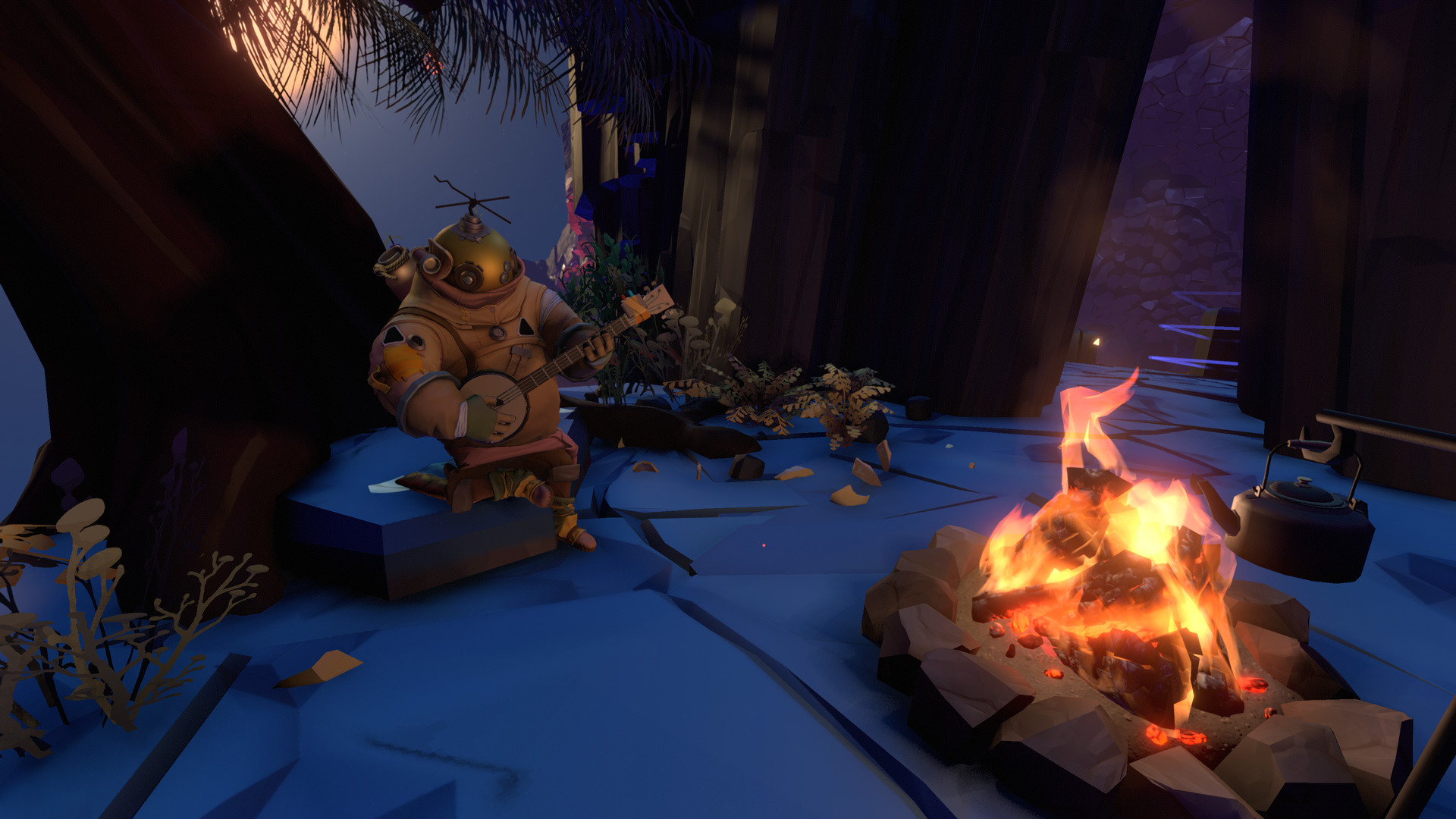
The Signalscope is one of the most useful tools in your Outer Wilds toolkit. It acts like a high-tech audio telescope, letting you track strange signals across the solar system. With it, you can pick up everything from eerie quantum hums to heartfelt banjo tunes drifting through the void. For both newcomers and seasoned travelers, learning how this gadget works is key to unraveling major secrets.
How To Use the Signalscope
Pulling out your Signalscope is simple: just equip it from your tool wheel (usually via the D-pad or number keys, depending on your platform). Once active, you’ll see a circular reticle on your screen—anything inside that reticle gets scanned for signals. The further you point it from your position, the wider the area it covers.
Scanning for Signals
The Signalscope can detect several unique frequencies:
- Traveler’s Signals (like Banjo, Harmonica, Whistle)
- Quantum Fluctuations
- Unidentified Signals
- Hide & Seek Signal (for a side activity early in the game)
Switch between them using the on-screen interface (shoulder buttons or bumpers, usually). Each signal has its own icon and a colored waveform to help identify what you’re hearing.
Interpreting the Readout
When something is picked up, the Signalscope shows you:
- Signal Source Icon: Shows what type of sound you’re tracking.
- Distance: Displays how far away (in meters) the signal originates.
- Waveform: Visualizes the sound signature, which can help you distinguish similar sources.
The scope can pick up signals even when you’re in your ship, on foot, or standing atop a planet’s wild terrain. This means you can use it pretty much anywhere—just keep an eye on your oxygen and suit integrity.
Practical Uses for the Signalscope
Finding Other Travelers
One of your first big jobs is tracking down other Outer Wilds Ventures travelers. Each one broadcasts a unique musical instrument. Here’s how to use the Signalscope for this:
- Tune to the specific signal (e.g., Banjo for Feldspar).
- Sweep across the sky until a strong audio cue pops up.
- Follow the direction—the distance counter will tick down as you approach.
Sometimes, signals pass through planets, so don’t get tricked into thinking you have to fly through solid rock! Get close, then search for cave entrances or surface clues.
Solving Quantum and Mystery Puzzles
Not all signals come from friendly NPCs. Quantum Fluctuations, for example, are subtle hints for some of the game’s biggest puzzles. Tune into this frequency if you’re chasing those elusive moving rocks or trying to piece together the Nomai’s research. The hidden stuff often broadcasts as “Unidentified Signal”—these are worth investigating if you’re hunting for lore or puzzle pieces.
Secret Spots and Hidden Collectibles
Odd signal blips sometimes lead to little side discoveries: easter eggs, collectible records, or Nomai writing logs tucked in locations you might otherwise miss. If you see something labeled “Unidentified Signal Nearby,” pull out your Signalscope and see what you can find.
Tips for Mastering the Signalscope
- Zoom Function: Hold the zoom button for a closer look, helpful for pinpointing tricky signals on big planets or when airborne.
- Use In Space: Even in orbit, scan with your scope. Some signals (like the Nomai Shuttles) are only catchable from space.
- Signal Overlap: Sometimes, more than one signal is nearby. Try shifting position or rotating the scope to untangle them.
- Keep an Ear Out: Certain signals only pop up during specific events or time loops. If something is missing, try again after resetting.
Common Signals and What They Mean
| Signal Type | What You’ll Find | |------------------------|-------------------------------------------------| | Banjo, Harmonica, etc. | Other travelers (story progress, help) | | Quantum Fluctuations | Quantum puzzles (moving objects, rare clues) | | Hide & Seek | Practice game in your home village | | Unidentified Signal | Environmental puzzles, Nomai ruins, anomalies | ## Wrapping Up
The Signalscope isn’t just a fancy space microphone—it’s the key to unraveling Outer Wilds’ best secrets. Don’t forget to use it any time you’re stumped, exploring a new area, or just curious about the weird noises on a distant moon. Pay close attention to the sounds you pick up. Sometimes, that echoing melody or mysterious static is pointing you toward your next adventure.
Navigating Quantum Objects
Quantum objects in Outer Wilds are some of the game’s most memorable and perplexing challenges. From boulders that vanish when you look away to entire towers that wink out of existence, these quirks are more than just visual tricks—they’re tricky puzzles grounded in the game’s made-up quantum rules. Learning how to interact with quantum objects is essential if you want to solve some of the Nomai’s biggest mysteries.
What Makes an Object Quantum?
You’ll notice quantum objects because they appear and disappear when you’re not looking directly at them. The most famous examples are Quantum Shards (rocks) and the elusive Quantum Moon. These things don’t just move—they completely relocate, jumping to new positions in an instant. But it’s not random. What matters is whether you (or your camera) are watching.
The Quantum Rule: Observe to Control
Here’s the number-one principle for these puzzles: quantum objects only stay put when they’re being observed. The moment you look away (or the room goes dark), they can shift somewhere else. Sometimes it’s only a short hop; sometimes, they can travel all over a planet—or even across the solar system.
Observation Tools
- Your own eyes: Standing and staring directly at a quantum object locks it in place.
- Probe Camera: Shoot a photo at a quantum object, and as long as the snapshot stays open, the object is “observed,” able to hold still even when you look away. This is crucial for multi-step puzzles or reaching hard-to-find spots.
- Scout Launcher: Similarly, scanning with your scout and keeping the image pinned gives you a second set of eyes.
Solving Quantum Puzzles
Quantum objects show up in many forms: rocks in caves, seeds, and the famous Quantum Moon. Here’s how to approach them.
Quantum Shards
Quantum Shards usually appear on several planets (Timber Hearth, Hourglass Twins, Giant’s Deep, etc.). If you look away—even for a blink—they’ll jump to another position. Sometimes, you need to get the shard into a particular spot to access a new area.
How to move them where you want
- Stare directly at the shard, then turn away or close your eyes (or turn off the lights). Check again—has it moved?
- Repeat until the object is where you need it. . To freeze its position, point your Scout’s camera at it and then use the photo as your observational anchor. This lets you move safely around or set up other puzzle elements.
Quantum Moon
The Quantum Moon is one of Outer Wilds’ greatest puzzles. It doesn’t just orbit randomly—it jumps around, appearing near different planets but never in two places at once. To travel to different moon locations, try these steps:
- Board your ship and approach the Quantum Moon when it’s visible near a planet.
- Land and exit—keep your eyes on the moon’s surface. . Enter the Moon’s tower, where the quantum rules hit hard: lights flicker, and locations shift anytime observation is broken.
- To “travel” to the moon’s other locations, extinguish all light sources, close your eyes/turn away, and reopen—the landscape will change. Observe closely to control where you end up.
Each planet’s Quantum Moon landing spot has unique clues about the Nomai, and piecing all of them together is key for late-game mysteries.
The Quantum Tower
In locations like the Tower of Quantum Knowledge (on Brittle Hollow), you’ll find puzzles built entirely around quantum observation.
- In one section, platforms move whenever you remove your gaze. You can only cross if you keep certain quantum surfaces held in place by constant observation—either with your eyes or a scout photo.
- Some areas require you to trap quantum objects by closing and opening doors, using limited light sources, or creative camera use.
Quantum Object Tips and Tricks
- Use the Scout Camera liberally: Pinning a photo lets you “watch” objects without standing still. Perfect for holding a shard in place while exploring or activating switches.
- Experiment with the environment: Sometimes, manipulating light (opening/closing doors, using lanterns) affects quantum shifts.
- Don’t rush: These puzzles often want you to experiment. Try different combinations of observation and movement.
- Read every Nomai note: Scattered messages frequently drop hints or subtle reminders about quantum object behavior.
Common Quantum Object Scenarios
| Scenario | Solution Approach | |------------------------------------|--------------------------------------------------------------| | Moving a quantum shard to a bridge | Observe/move, repeat until aligned, then pin with a photo | | Keeping a quantum platform steady | Use Scout photos, don’t blink, or adjust light sources | | Quantum Moon jumps | Control observation inside via closing/opening your eyes | | Solving the Tower of Quantum | Follow wall chalkboards, use probe creatively, experiment |
Why Quantum Mechanics Matters in Outer Wilds
At first, these rules sound weird or even illogical, but they line up with the game’s recurring theme of curiosity and the scientific method. The Nomai left clues about quantum objects, knowing you’d need to experiment, fail, and try again. Once you learn to use the game’s observation logic, new pathways open up across the solar system.
Quick Recap
- Quantum stuff moves when you aren’t watching.
- Pin them in place with your eyes, flashlight, or Scout photos.
- Experiment with observation and darkness to solve quantum puzzles.
- Each quantum challenge builds on your understanding—so pay attention and don’t give up.
Cracking the code on quantum objects is part of what makes Outer Wilds so memorable. Take your time with these, and remember: sometimes, all it takes is a change in perspective—or, in this case, just keeping an eye on things.
Time Loop Mechanics
Outer Wilds runs on a persistent 22-minute time loop that ends with the sun exploding in a supernova. Understanding how this loop shapes the game—beyond just acting as a timer—is key to both unraveling its mysteries and mastering its puzzles.
The 22-Minute Countdown
Every loop begins as you wake up at your campsite on Timber Hearth. From that moment, a hidden countdown starts ticking. After 22 minutes—give or take a few seconds—the sun will go supernova, instantly ending your run and restarting the day. You’ll retain every bit of knowledge you gained, even if objects, planets, and Nomai artifacts reset.
What may surprise new players is just how many things don’t change when you loop:
- Your logbook and ship computer: All clues, frequencies, and progression notes you gather remain, allowing you to build on knowledge rather than items.
- Your own understanding: Everything you learn about the world—puzzle solutions, safe routes, secrets—is yours to remember even while the world forgets.
No Traditional Saving
You won’t find a “save” feature in Outer Wilds. The loop itself is the save system. When the sun explodes, you’re reset, but your discoveries stick with you. That means you’re free to experiment, take wild risks, and poke at the universe’s edges, because the cost of failure is, at most, a few minutes.
If you ever need a fresh start before the loop ticks down, you can do one of several things:
- Meditate by the campfire: This option shows up when you speak to Feldspar or other Hearthians sitting at fires. Meditating skips instantly to the next loop.
- Die in any other way: Environmental hazards, crashes, or even oxygen loss restart the day.
Time-Sensitive Events
Certain events and puzzles unfold only during specific intervals of the loop. Here are a few examples:
- Falling Sand on the Hourglass Twins: Early in the loop, Ash Twin is covered in sand that gradually drains onto Ember Twin, revealing new places to investigate and closing off others as the cycle advances.
- Brittle Hollow’s Fracturing Surface: As the minutes pass, volcanic chunks repeatedly smash the planet, opening up or sealing off pathways in real-time.
- Quantum Tower Alignment: Some locations become accessible only at the right alignment or after environmental changes during the loop.
Paying attention to the sequence of these events—and syncing your actions to those timings—becomes vital for solving some of the tougher puzzles.
How the Loop Shapes Exploration
The time loop structure encourages a different mindset than many other open world games. Here, trial and error is expected. Lost somewhere tricky? You only risk a small chunk of time, not permanent progress. Big leaps, risky flights, and bold puzzle attempts are rewarded with understanding, if not always survival.
Every run can focus on a single objective: maybe tracking a signal, reaching a newly-uncovered spot, or reading a Nomai message you missed before. Because the universe resets, you can iterate on your routes and refine your plans without penalty.
Strategy: Working With the Loop
Setting Goals Before Launch
With limited minutes, it’s smart to choose a clear goal each loop. Heading somewhere new? Plan your flight path in your head or in your log. Chasing a time-sensitive event? Prioritize what only happens at certain points of the cycle. Treat each loop like a scientific experiment with a hypothesis you’re testing.
Resetting On Purpose
If you get stranded, stuck, or accomplish your target early, use meditation to restart the loop. This tactic saves time and helps you avoid hectic or unwinnable situations (say, waiting too long for a sand tunnel to open up on the Hourglass Twins).
Learning From Failure
Early attempts will be filled with “failures”—missed timings, untimely deaths, or confusing puzzles. But every failed attempt gives you a mental map for next time. Over time, you’ll shave crucial seconds, avoid hazards, and maybe even automate complex sequences (think: using gravity cannons or managing black hole warps quickly).
Time Loop Limitations and Clues
Outer Wilds doesn’t tell you everything about how the time loop works right away, but a few pieces are worth knowing:
- Not all puzzles are time-sensitive: Some can be solved at any point during the loop, while others hinge on precise moments.
- Signals and environmental cues can hint at timing: Listen for sound cues, and watch visual changes, to clue you in on when to act.
- Occasionally, what you do in one loop can change your understanding (but not the world) in the next: Discovery and learning, not “items,” carry forward.
Advanced Tips for Time Loop Mastery
- Use the sun as a timer: You don’t get a countdown, but glancing at the sun’s color can help you gauge time left. When the sun deepens to red, think about heading somewhere safe or wrapping up your current goal.
- Keep mental notes: If you spot a time-locked door or yet-unreachable area, jot it down (or check your ship’s log) so you can return at the right moment in a future loop.
- Experiment with parallel tasks: Can you trigger one event, then race somewhere else while the environment changes? Chaining discoveries in a single loop is part of the fun.
Wrapping Up
The time loop is at the heart of Outer Wilds’ magic. Once you treat each run as a low-stakes experiment—one where failing means learning—it transforms curiosity into your greatest weapon. Don’t stress about lost time. Every question you answer and every mistake you make brings you closer to the larger truth waiting at the end of the solar system’s cycle.
Uncovering Nomai Secrets
Your journey through the Outer Wilds wouldn’t be half as memorable without the ancient Nomai civilization leaving cryptic clues everywhere. Deciphering these mysteries isn’t just optional flavor — it’s the backbone of the game’s entire story and most complex puzzles. The Nomai left tech, writings, and remnants on nearly every planet, and peeling back those layers is what ties all your puzzle-solving and exploration together.
Let’s break down how you’ll spot, investigate, and interpret Nomai secrets to finally piece together the Nomai’s fate and your own quest.
Recognizing Nomai Technology and Writing
Nomai tech and texts stand out from the rough Hearthian tools. Look for:
- Curved, white stone structures: Their ruins have a distinct, elegant look — elongated arches, swirling markings, and unfamiliar machinery.
- Slate writing on walls: The glowing text written in spiral patterns is always Nomai. It branches off like a tree as each member adds their own replies, forming conversation threads.
- Translation Tool: Early on, you’re given a handheld device that “reads” these writings. Point, hold the trigger, and the device auto-translates the alien script into your language right on the wall.
- Devices and Artifacts: Orb-sliding tracks, projection stones, warp pads, and grav lifts are all Nomai creations. Interact with them by moving orbs into sockets, inserting stones, or standing in designated fields.
Once you know what to look for, you’ll spot Nomai presence everywhere — even in places that don’t look important at first glance.
Deciphering Conversation Threads
Most Nomai story bits aren’t presented linearly. Instead, writing is laid out as a main trunk (the prompt or idea), with reply branches sticking out. These side threads represent different Nomai discussing or debating the topic.
- Start at the root: The thickest line or core script is usually the main question or announcement.
- Follow branches: Each offshoot is a reply, written by another Nomai (with their name and sometimes “color”), and those can also receive replies.
- Key terms: Pay attention to recurring names of Nomai, locations, or projects (like the Ash Twin Project, the Eye of the Universe, or the Vessel).
Your translation tool will automatically record translated text in your log, which helps you follow sprawling, interplanetary plotlines.
Piecing Together Nomai Projects
Major Nomai undertakings are scattered or half-buried across the system. Most puzzles are threaded through these:
The Ash Twin Project
- What to look for: On the Ash Twin planet, towers rise from the sand as the loop progresses. Entering these towers lets you unlock teleporters and see powerful Nomai tech.
- How it connects: Much of the Nomai’s endgame plan involved storing memories and teleportation via these towers. Reading nearby logs reveals how the time loop works and hints at using the towers to access mysterious locations.
The Southern Observatory and the Quantum Puzzle
- Location: Brittle Hollow and the White Hole Station.
- Challenge: Gaining access to the Observatory involves hazardous platforming and timing (often while the planet crumbles). Inside, Nomai records experiment with quantum mechanics, giving hints for the Quantum Moon’s madness.
- What you learn: Nomai philosophy about quantum rules and clues for manipulating quantum objects — think moving islands, teleporting shards, and the ever-frustrating Quantum Moon’s location puzzle.
The Eye of the Universe
- Scattered clues: References to the Eye show up in almost every Nomai record. They devote entire facilities to finding and reaching it.
- Tracking progress: Each Nomai conversation gives you coordinates, ideas, or failed experiments — piecemeal evidence leading toward how to unlock the Eye’s signal and learn why it matters.
Advanced Nomai Puzzles and Logic
Some Nomai secrets unfold only after you connect discoveries from different planets:
- Warp Towers: Recognize the sun-shaped symbols atop towers and their matching numbers below. Standing inside as the twin planet passes overhead is the key to instant teleportation.
- Mask Mechanisms: Those glowing masks in hidden rooms? They’re connected to the time loop and the fate of several Nomai. Trace cables and read logs to see how they “reboot” death.
- Projection Stones: Each colored stone slots into a socket and projects an environment elsewhere in the system. Use them to uncover the shapes of lost facilities or watch Nomai meetings happen in real time.
Following the Bread Crumbs: Logical Investigation
- Cross-reference ship logs: Your ship automatically turns key discoveries into charted “rumors” and locations. Use this as your murder board to see what mysteries are connected, what threads are unfinished, and where Nomai leads point next.
- Double back: Visiting places in a new order will often show you fresh info — maybe a Nomai room makes no sense on your first visit, but once you’ve found a related log on another world, everything clicks. The game subtly nudges you to revisit spots with your newly expanded Nomai knowledge.
- Map out timelines: Use logs to correlate who went where, what experiments went wrong, and why the Nomai were desperate. The slower you comb through their history, the more you’ll appreciate the interconnected story arcs.
Tips for Seeking Out Nomai Lore
- Search every ruin and dead-end — even empty Nomai rooms often hide projectors, logs, or alternative pathways.
- Translate everything you find. Some key story bombs hide inside offhand remarks in “reply” branches.
- Interact with every piece of Nomai tech, even if you’re unsure what it does at first. Trial and error can trigger hidden notes, open new paths, or reset tricky machinery.
Final Thoughts
The Nomai’s legacy propels the central mystery of Outer Wilds. By following their signals and debating logs, you start syncing up with the way they thought — scientific, curious, endlessly persistent. Tracking their experiments leads you through warped space, impossible puzzles, and secret chambers. Each discovery loops back into your own adventure, pulling you further into the story with every clue uncovered. Stay curious, keep an open mind, and dig into even the smallest Nomai detail. The answers you uncover from their ruins will illuminate the truth at the heart of the universe — and maybe even help you survive your own cycles.
Piecing Together the Story
Outer Wilds isn’t content to tell you its history — it expects you to reconstruct it, layer by layer, from scattered logs, half-finished experiments, crash sites, and eerie ruins. The system’s true backstory is everywhere, but making sense of it takes curiosity and a sharp memory. Here’s how players can approach the tangled narrative and start laying out the big picture:
The Nomai: A Timeline in Fragments
There’s no single “main quest” marker. Instead, every Nomai settlement, shuttle, or abandoned research site adds another time-stained puzzle piece. The Nomai arrived in this star system long before your people, and they were brilliant but flawed, just like anyone else. As you move from place to place, you’ll notice clues about the order of events:
- Early habitats (Ember Twin caves, Timber Hearth crash pods) show the Nomai’s first landing and struggles.
- Later labs (Hourglass Twins, Brittle Hollow's observatory) reveal more advanced experiments — like quantum physics, black holes, and memory storage.
- Desperate final projects (the Ash Twin Project, the attempt to locate the Eye of the Universe) reflect growing anxiety and urgency.
Reading these logs in any order is possible, but fitting them into a timeline helps you see why the Nomai took increasingly risky steps.
Connecting Characters, Places, and Clues
You’ll often spot the same Nomai names pop up: Pye, Solanum, Yarrow, Feldspar, and others. These recurring figures had relationships, rivalries, and distinct goals. Try to pay attention to:
- Name-dropping in logs: If someone mentions a project lead elsewhere, track where you’ve seen their work.
- Color-coding in conversations: Different colors or writing “accents” signal different speakers in multilingual logs.
- Projects linked across planets: A failed experiment on Giant’s Deep might tie directly to some scribbled warning in the Brittle Hollow observatory.
Drawing these connections is a manual process, but your ship's Rumor Mode becomes a huge help, updating threads automatically whenever you find something new.
The Mysteries Beneath the Story
At first, it’s all lost research notes and high-concept physics, but subtle, personal threads soon emerge. For example:
- The story of the Sunless City’s evacuation: Pieced together from logs, warnings scrawled on walls, and collapsed tunnels, this tragic chapter gives you both practical navigational info and emotional weight.
- The Quantum Moon: More than a scientific riddle, the moon ties together philosophy, mysticism, and loss within the Nomai community.
- Audio clues: Sometimes, humming Nomai technology or translated sound logs drop hints about places or events you’re yet to find.
The system encourages that “Aha!” moment — when two scraps of information, maybe found on different planets hours apart, finally fit together to give you real insight into what happened.
Using the Ship Log to Solve the Mystery
Your translator logs every message and site, and the ship itself builds a web of nodes — rumors, unexplored leads, and completed discoveries. Don’t ignore this tool:
- If you feel stuck, scan your log. Find threads marked as “unclear” or “rumor,” and chase those.
- Every node links to specific discoveries. Look for ones with question marks; these need further investigation.
- Nodes update across the whole map, so a breakthrough on the Hourglass Twins might open up new hints for Dark Bramble, the Quantum Moon, or the Eye of the Universe elsewhere.
Keeping tabs on this living detective board prevents overwhelm and points you toward the next missing story piece.
Tips for Filling in the Blanks
- Translate everything, even logs that seem minor. Offhand comments sometimes turn into breakthroughs much later.
- Take notes when something confuses you. Writing down which Nomai worked on what project can make a messy storyline clearer.
- Don’t worry about seeing everything in perfect order. Outer Wilds expects you to revisit and rethink, and new knowledge always shines fresh light on old logs.
Building the Full Picture
Piecing together the story in Outer Wilds is an act of curiosity and patience. You will uncover fate, hope, and disaster by making connections between clues tucked away in forgotten ruins. Each new log or artifact you translate acts like one more piece of a massive, secret puzzle. Some realizations will come in a flash; others only arrive after hours of backtracking and rereading.
This approach to storytelling rewards attention and persistence, looping narrative threads through each wreck, experiment, and discovery. Gradually, you’ll see how the past set the stage for the present — and how much rides on your understanding the Nomai’s triumphs and failures. Keep searching, compare every clue, and the underlying truth will start to make sense. Outer Wilds trusts you to put it all together — and gives you the tools to do just that.