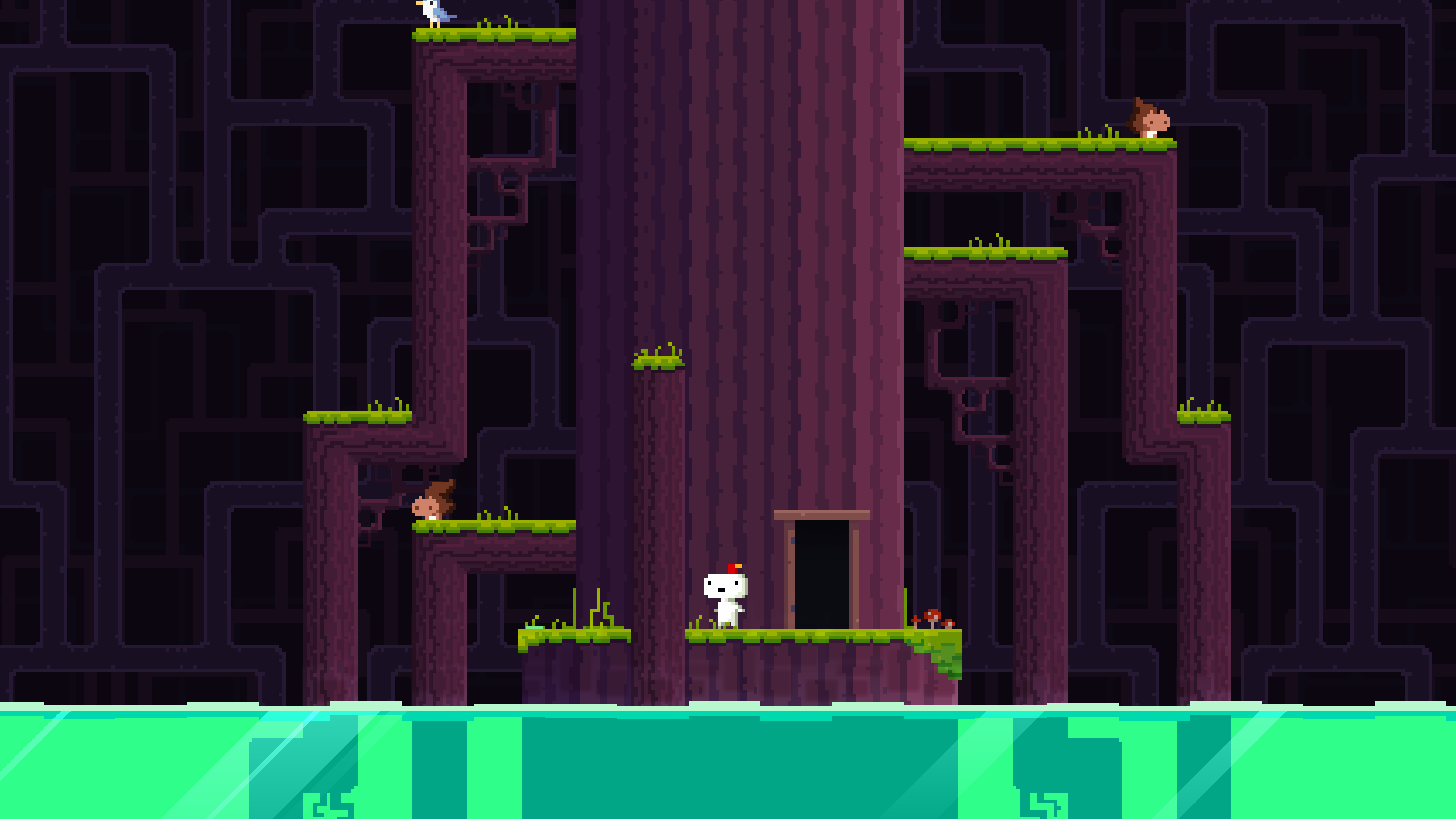
Fez Secrets and Puzzles Guide
Unlock Fez’s mysteries with guides to rotation, tesseracts, artifacts, secret rooms, and language decryption. Master every puzzle!
Anyone who’s spent more than a few minutes in the world of Fez knows there's a lot more happening than meets the eye. On the surface, it’s all colorful platforms and charming pixel art, but underneath, there’s an intricate web of secrets, cryptic codes, and puzzles that can stump even experienced players. Whether you’re curious about that mysterious alphabet on the walls, puzzled by cube doors, or simply wondering if there’s something you missed after the credits rolled, Fez has a way of making you look at everything from a different angle—sometimes quite literally. Getting to the bottom of these mysteries isn’t just about solving puzzles, but about noticing the little things in every corner, and sometimes, letting curiosity take the lead.
Rotation Guide
Rotation isn’t just a basic move in Fez—it’s the heart of every puzzle and secret. Understanding how and when to turn the world is the difference between getting stuck in a dead-end and finding hidden treasures. If you’re scratching your head about when or why to twist the perspective, this guide has your back.
How Rotation Works
In Fez, the 2D world sits on a 3D cube. Press the left or right trigger (or shoulder buttons) to spin the entire view ninety degrees at a time. Everything that looked flat is suddenly something new, with platforms lining up in ways that weren’t obvious a second ago.
The Four Views
- Front: Starting perspective.
- Right Side: After a right rotation.
- Back: Two turns from the front.
- Left Side: After a left rotation from the front.
Each view hides new paths, and some puzzles only make sense once you’ve seen all four sides.
Changing the Landscape
Rotation isn’t just a visual gag—it changes the world in practical ways. Imagine a floating platform that looks out of reach. Turn the world, and that platform might line up perfectly with your current path. Similarly, ladders, doors, and even hidden rooms can suddenly become accessible.
Example: Crossing Gaps
If you see a gap that’s too wide to jump, try spinning the stage. Maybe there’s a platform on the “side” view that bridges the gap in the “front” view. Rotation lets you fold those impossible spaces together.
Using Rotation for Puzzles
Rotation tricks are everywhere in Fez. Here are some scenarios where your perspective changes everything:
Lining Up Platforms
You’ll often need to rotate the world so that platforms overlap visually, letting you move across spaces you couldn’t otherwise. Sometimes, platforms are only solid if you can see them from your current view—if a platform is hidden behind something else, Gomez will act like it’s not there.
Hidden Doors and Paths
Keep an eye out for things peeking out from behind walls or trees. If something looks odd, try a rotation. Doors might stay hidden until the scenery shifts.
Vertigo Puzzles
Fez loves hiding pathways on the tops and bottoms of structures. Rotate until the side you’re on becomes the top or bottom, turning walls into floors—or floors into ceilings. This twist can reveal whole new sections of the map or even a secret cube.
Tricks and Tips for Mastering Rotation
- Preview Paths: Before making a tricky jump, try spinning the camera to check for hidden platforms or safer routes.
- Watch for Symbols: Some puzzle clues only line up from certain angles, like patterns or numbers on the walls.
- Remember Orientation: It’s easy to get turned around. If you get lost, rotate back to the starting view and retrace your steps.
- Time Your Rotations: Some puzzles involve rotating at the right moment—especially with falling blocks or moving platforms. Don’t rush; look around before making a move.
Common Mistakes
- Rotating Randomly: Sometimes, spinning wildly makes things harder to track. Plan out each rotation, and remember what each side looks like.
- Ignoring the Background: Don’t just focus on the immediate path—sometimes clues or secrets are in the background art, only visible after a rotation.
- Forgetting Object Persistence: Objects, platforms, and enemies exist in all four views—even if you can’t see them. Don’t let a hidden enemy surprise you!
Practicing Your Rotation Skills
The best way to get comfortable is to experiment. Early in the game, practice lining up platforms and spotting new paths with each turn of the world. You’ll start to spot the telltale signs that something’s being hidden by perspective.
Wrapping Up the Rotation
Mastering rotation in Fez is like learning a new language. At first, it’s confusing; soon, you notice patterns and clever tricks everywhere. Before long, the “impossible” jumps and strange puzzles make sense—once you learn to twist the world the way Gomez does. Keep spinning that viewpoint, and no puzzle will keep its secrets from you for long.
Tesseract Guide
Tesseracts—those shimmering, translucent cubes—carry a specific kind of mystery in Fez. They look special, sound different, and always feel a bit out of reach until you know exactly what they’re for. This guide breaks down what tesseracts are, how to collect them, and what they mean for 100% completion.
What Is a Tesseract in Fez?
A tesseract in Fez is often called an "anti-cube" by the community, but the game itself refers to these dark-blue, glowing cubes as tesseracts. They’re a parallel to the regular golden cubes—while gold cubes reward simple collection and exploration, tesseracts are given for solving some of Fez’s most complex puzzles. You’ll find 32 tesseracts in total, matching the number of gold cubes.
How Tesseracts Differ from Regular Cubes
Regular Gold Cubes
- Earned by collecting eight cube bits per cube or found whole in treasure chests.
- Usually tied to platforming challenges and light puzzle solving.
Tesseracts
- Obtained by cracking Fez’s hardest puzzles, often involving ciphers or obscure clues.
- Always appear instantly in full form; you never collect “bits” of a tesseract.
- Some puzzles needed for tesseracts have no direct hints, or only show up late in the game.
Where Are Tesseracts Hidden?
Tesseracts are found all across the Fez world, but they aren’t just lying around. Here’s where you need to look:
- Obscure puzzles: Some rooms have strange symbols, clock towers, tuning forks, or cryptic QR codes. Solving these yields a tesseract.
- Code-based puzzles: Deciphering the Fez alphabet or numeric codes will often result in being given a tesseract.
- World secrets: A few tesseracts are linked to secrets like inputting button codes, listening to musical chimes, or solving environmental riddles.
Specific Puzzle Types
- QR Code Rooms: Use your phone to scan in-game QR codes for secret button sequences.
- Clock Room (The Giant Clock): Some tesseracts come from puzzles tied to real-world time—returning at specific hours or after waiting in real time.
- Music Puzzles: There are rooms that play a sequence of notes—repeat them in the right order to reveal a tesseract.
Collecting Tesseracts: Key Steps
1. Learn the Fez Language
Many tesseract puzzles depend on understanding Fez’s in-world alphabet and numeric system. Walls, pillars, and even NPC dialogue can hide clues.
- The alphabet: Letters appear on stone tablets or pillars. Once you decode the basic substitution, you can read translations everywhere.
- Numbers: Fez uses a base-10 dot-and-line numeral system. Pay close attention to clusters of lines and points.
2. Solve Room-Specific Challenges
Each tesseract comes from its own unique puzzle. A few tips:
- Take Notes: Jot down or screenshot symbols and patterns you find.
- Try Button Combos: Some puzzles require you to tap certain buttons in order (example: RT, LT, up, down) after spotting a hint.
- Listen for Sounds: Tunes and bells can be part of a solution—recreate the sounds with your own controls.
3. Don’t Ignore the Black Monolith
The Black Monolith Room puzzle is infamous in Fez. It gives almost no clues. The solution, though, is a very long button sequence that you must input perfectly. This tesseract stumped the community for years and is considered one of the hardest rewards.
4. Backtrack With Fresh Eyes
Once you know the language and patterns, old areas hold new secrets. If you’ve left a strange room unsolved, come back after progressing further. Sometimes, context from later puzzles sheds light on what you missed.
Tips for Finishing All Tesseract Puzzles
- Use External Tools Sparingly: It’s tempting to check a guide for solutions on hard rooms (especially the Monolith), but try to apply what you’ve learned first. The satisfaction is worth it.
- Document Everything: New symbols, odd backgrounds, and even NPC chatter can be clues.
- Be Patient: Some tesseracts, especially those tied to the clock, only unlock at certain times or after waiting a long while. Come back later if needed.
What Do You Get for All 32 Tesseracts?
Collecting every tesseract is part of getting 100% completion in Fez. More than just an achievement, collecting all golden cubes and all tesseracts gives you access to Fez’s "true ending" after finishing your New Game+ playthrough. You’ll also get the sense of having solved some of the trickiest brainteasers in indie gaming.
Conclusion
Tesseracts in Fez reward deep thinking, patience, and a willingness to question everything. Whether you’re translating runes, chasing chimes, or inputting arcane button patterns, each tesseract marks a riddle outsmarted. Track your findings, piece together the world’s hidden language, and enjoy the “a-ha” moment that comes with every solved puzzle. With this guide, you’re that much closer to completing Fez’s secret-filled journey.
Artifact Guide
Artifacts in Fez aren’t required for finishing the game’s story, but they play a huge role in unraveling its deeper puzzles. Think of these items as tools or keys: each artifact pulls back the curtain on another piece of the game’s ciphers, mysteries, or mechanics. There are a total of four artifacts, and every single one sheds light on how the world of Fez operates—especially when it comes to secret tesseracts and cryptic codes.
What Are Artifacts in Fez?
Artifacts are special collectible items hidden throughout Fez’s sprawling map. Unlike cubes and tesseracts, you won’t see multiples—each is unique, and most are tucked away in challenging or hard-to-reach treasure chests. Once you find an artifact, it appears in a separate menu from your main collectibles. Some artifacts are practical tools for solving puzzles, while others deliver hints that gradually unlock the deeper logic behind Fez’s world.
The four artifacts are:
- The Treasure Map
- The Tome (also called the “Written Cube”)
- The Counting Cube
- The Skull
Let’s break down what each one actually does.
1. Treasure Map
The Treasure Map gets added to your inventory as a collection of mysterious diagrams and symbols. It doesn’t tell you directly where to go, but it highlights locations with hidden cubes, anti-cubes, or doors. These scribbled sketches might show the layout of a specific area, an arrangement of platforms, or even hints about secret button codes. Think of the map as a “reminder” system—a way to recognize certain locations later in your travels.
How to Use It
- Compare the diagrams to areas you visit. If you notice a layout that matches, take a closer look at every nook and cranny in that zone.
- Some maps show you how to access hidden areas or activate secret mechanisms.
- Not every map is used for solving puzzles, but all can nudge you toward secrets you might otherwise miss.
2. Tome (Written Cube)
The Tome looks like a book, but what’s written inside won’t make sense at first. The text uses Fez’s runic alphabet, and the pages are stuffed with symbols and patterns. The game never directly translates it for you; instead, the Tome is a puzzle in itself.
How the Tome Helps
- Once you crack Fez’s writing system (the in-world “Fez alphabet”), you can read sections of the Tome and uncover button codes or conceptual explanations for puzzles.
- Some pages serve as direct guides for specific tesseract or cube rooms, hinting at what kind of puzzle or code you’re about to face.
- Translating the Tome bit by bit helps demystify many of the odd symbols you find scribbled around the world.
3. Counting Cube
The Counting Cube is one of the most valuable artifacts for deciphering Fez’s number puzzles. It displays a series of marks: dots and lines arranged in a pattern. These represent the game’s unique base-10 counting system. You’ll see the same symbols on obelisks, wall carvings, and doorways throughout Fez.
Using the Counting Cube
- Treat it as a reference chart. Whenever you hit a puzzle with symbols or numbers, glance at your Counting Cube and compare.
- It’s the best shortcut for converting Fez’s numerals into standard numbers, which is vital for inputting correct code sequences or opening certain doors.
- The clues provided here open up a new understanding of numeric puzzles across the game.
4. Skull
The Skull (“Ancient Skull” or “Skull Artifact”) is the most cryptic of the artifacts. Finding it is a challenge on its own, and for many players, its true purpose isn’t immediately obvious—it doesn’t seem to solve any puzzles directly. Instead, the Skull mostly serves as a nod to Fez’s love of hidden details and references.
What Does the Skull Do?
- Its primary function is as an Easter egg: a collectible that sharp-eyed players can snag if they’re combing the game for every secret. Finding it gives you bragging rights.
- Some fans speculate about possible uses, but as of now, the Skull doesn’t interact with any of the mainline puzzles or endings.
Where to Find the Artifacts
Each artifact sits in a hidden chest, often tucked away behind environmental puzzles, alternate routes, or doors that require specific code sequences:
- Treasure Map: Early on, watch out for big treasure chests in out-of-the-way rooms—even some main hub areas have them.
- Tome: This usually pops up in an area that’s hard to access without solving an environmental puzzle involving platforms or doors.
- Counting Cube: Deep in the world, this chest is sometimes only reachable after unlocking shortcuts or warping between areas.
- Skull: Tucked away off the beaten path—often at the end of an optional route, in a zone with strong “secret” vibes.
Pay close attention to large, ornate chests as you play. If you see one that isn’t easy to access immediately, it’s probably guarding an artifact.
Tips for Seeking Out Artifacts
- Check the Map: Hidden chests show up as a small white square icon if you’ve entered a room but haven’t opened its chest yet.
- Experiment With Rotations: Remember that some rooms hide their secrets on a different face or orientation—spin the world from all angles.
- Revisit Old Areas: Once you pick up a new artifact, especially the Counting Cube, try revisiting previously unsolved mysteries. They might suddenly make sense.
What Happens After Finding All Artifacts?
Collecting all four artifacts isn’t needed for the basic ending—however, they’re game changers for deep puzzle-solving and are essential if you want a full clear. Artifacts, combined with a full set of cubes and tesseracts, let you unlock every puzzle’s final layer. Some secrets only truly “click” once you have these items at your disposal. That sense of clarity (and the thrill of finally understanding Fez’s riddles) is what makes the hunt worthwhile.
Wrapping Up the Artifact Hunt
In Fez, artifacts reward thoroughness, curiosity, and a knack for spotting patterns. Whether you’re squinting at the Counting Cube to break a number code, or using the Treasure Map to hunt for a missing tesseract, each artifact gives you insight into a little more of what makes Fez so mysterious. Keep these tools close—your next breakthrough might be just around the corner.
Language Decryption Guide
Fez throws a curveball at puzzle fans with its hidden writing systems. If you’ve started noticing cryptic symbols carved into walls, on signs, and in artifacts like the Tome, you’ve stumbled into one of the game’s deepest rabbit holes: language decryption. Breaking these codes isn't just extra fun—it’s often needed to solve some of Fez’s toughest secrets.
Let’s break down the languages used, how you can crack them, and where you’ll use your newfound translation skills.
The Fez Alphabet
All over the game world, you’ll spot glyphs that look like simple line segments and dots. This “alphabet” is used on plaques, in the Tome, and in some puzzles. Understanding how it works unlocks a bunch of hidden knowledge.
How the Fez Alphabet Works
- The Fez script is a substitution cipher. Every unique symbol stands for a letter in the English alphabet.
- There are 26 letters, each with a distinct mark.
- The symbols are usually grouped like English words—so if you see a space, that separates words, not just letters.
What the game doesn’t tell you: There’s no Rosetta Stone hidden anywhere. Instead, you have to match recurring symbols with in-game text (like pillar signs or repeated words such as “cube,” “rotate,” or “door”) to start your translation.
Tips for Decoding the Alphabet
- Write It Down: Snap photos or draw what you see. Grab all recurring symbol sets.
- Spot Recurrences: Look for signs near doors—most say the same thing. If you know what a door leads to, you can guess words.
- English Puzzles: Look for three-letter words or repeated double-symbols; these often signal “THE” or “DOOR.”
- Try Some Guesswork: Common letters in English (E, T, A, O) appear the most. If you see a symbol used everywhere, there’s your clue.
With enough effort, you’ll draft your own key. When you crack your first word, matching letters with symbols gets easier. Before long, messages in the Tome or on the walls stop looking random.
The Numbers System
Separate from the Fez alphabet is the dot-and-line numbers system (base 10, but not quite Roman numerals). Understanding this is essential for number puzzles, door codes, and more.
Numbers Breakdown
- Dots represent ones. Lines represent fives.
- Arrange them in a vertical stack. Top to bottom, combine the values.
- One dot = 1
- Two dots = 2
- One line = 5
- One line + two dots = 7
So, for example, if you see three horizontal lines, that’s 15 (5+5+5). Add dots for extra numbers.
Markings on doors often use symbols like this. Once you have the Counting Cube artifact, you can compare it directly to the puzzles in each room.
The Tetromino Code
The third “language” you’ll face is the blocky Tetromino code. Doors, panels, and even some maps display iconic Tetris-style shapes. They’re more than just decoration.
Understanding Tetromino Input
- Every Tetromino shape translates to a controller input.
- Think of your controller’s D-pad: Up, Down, Left, Right.
- If you see an S-shaped block, read it as a sequence of steps—each segment is a direction.
- You’ll need to input the sequence by pressing those directions on your controller, in order, while standing near the relevant puzzle.
Many of the toughest cube and anti-cube puzzles rely on you reading these symbols correctly. Some rooms even expect you to input codes you find etched elsewhere.
Where Language Decryption Matters
Learning Fez’s codes gives you the edge on:
- Tesseract Doors: Many hidden doors only open when you input the right Tetromino code.
- Treasure Clues: Reading wall clues or maps often reveals solutions hidden in plain sight.
- The Tome: Deciphering the pages clears up obscure platforming or code-based puzzles.
- Achievement Hunting: Some secret cubes and anti-cubes are impossible without translating clue texts.
- Unlocking Endgame Secrets: A few late-game puzzles require full sentences decoded from Fez script to solve.
Tools and Resources
If you get stuck, outside resources and community wikis have full alphabets, but solving them yourself is rewarding. Consider grabbing a notebook or using your phone to track symbols and findings. Slow and steady work pays off as you gradually unravel the secrets behind every cryptic message.
Summary: The True Joy of Decoding
Unraveling Fez’s secret codes may feel overwhelming at first, but making that initial breakthrough feels like magic. Piece by piece, the world’s mysterious symbols become meaningful. Next thing you know, you’re breezing by code-locked doors and solving environmental riddles the way the developer intended—from genuine understanding.
Stick with your translation notes, try out your guesses, and watch as the game reveals even deeper layers of its quirky universe. Decoding the language is a puzzle that pays off in satisfaction and bragging rights for anyone who loves a great mystery.
Secret Room Guide
Scattered across the pixelated world of Fez are rooms hidden behind breakable walls, secret codes, and clever camera tricks. These secret rooms aren’t just for show—they often hold cubes, anti-cubes, maps, or artifacts needed for 100% completion. If you’re looking to tick every box and piece together all the mysteries, you’ll need to know where and how to access these elusive locations.
Below, you’ll find a breakdown of what secret rooms are, common types, notable locations, and how to spot the telltale signs that a hidden path is nearby.
What Are Secret Rooms in Fez?
Secret rooms are enclosed locations tucked away behind fake walls, invisible platforms, or special puzzles. Some only open when you solve a riddle or input a Tetromino code. Others are simply concealed—if you don’t know to check, you’ll walk right past.
Inside, you might find:
- Cubes and anti-cubes: The core collectibles.
- Keys and artifacts: For progression or deeper lore.
- Treasure maps and clues: Often adding layers to mainstream puzzles.
- Easter eggs: References or just-for-fun secrets.
How to Identify a Secret Room
Some secret rooms stand out with visual hints; others are nearly invisible. Here’s what to watch for:
Subtle Visual Clues
- Cracked or differently colored walls: These are often breakable or pass-through.
- Oddly placed platforms: Sometimes there’s a door where it looks like there’s nothing.
- Mismatched wall decorations: A row of bricks doesn’t match the others? Suspicious.
- Unusual shadows: Sometimes shadows point out passageways not obvious otherwise.
Audio Cues
Sometimes, you’ll pick up faint chimes or different background sounds near a hidden entrance. Listen for audio cues, especially in large, quiet rooms.
Camera and Rotation Tricks
Fez's 2D/3D rotation means some doors or holes only line up from a specific viewpoint. Rotate the world and watch for hidden passageways.
Tactile Clues
When you bump Gomez against a wall and he disappears out of sight for a split second, there might be a secret tunnel right there.
Major Secret Rooms and How to Access Them
Let’s look at a few of the most memorable or important secret rooms in Fez:
1. The Waterfall Room
One of the earliest and most classic secret rooms. Just outside Gomez’s village, look for the big waterfall. Rotate the camera and check behind it—there’s a concealed door! Inside sits one of your first anti-cubes.
2. The Bell Room
A tall room with a big bell hanging at the top. There’s a panel at the bottom with symbols reminiscent of the Tetromino code. Inputting the right pattern by hitting the bell in a specific sequence (the code is found elsewhere in the world), reveals an anti-cube.
3. The Lighthouse Base
On the lowest floor of the lighthouse in the seaside hub, one wall color seems just a bit off. Walk straight through and find a chest out of sight—a map or even a cube may be waiting.
4. The Clock Tower’s Secret Room
Fez features a real-time clock tower puzzle. At one hour of the day, a door at the top of the clock tower opens, leading to a room with an anti-cube. There’s no workaround: the room opens at a certain time, so check back at different hours.
5. The Dungeon’s Overlapping Door
The dungeon hub has a weird spot with two doors stacked on top of each other. One leads to a mini-room; the second, hidden when the world is rotated, leads to a secret containing treasure or cubes. This is a good example of how rotation can show new possibilities.
6. The Floating Island’s Concealed Passage
On the floating island, try pushing up against grassy cliff faces or odd corners—there’s a passage inside one of the large rocks. Artifacts or treasures are tucked here.
Tips for Finding Every Secret Room
- Always rotate the environment! Some entrances don’t exist unless the world is viewed from just the right angle.
- Check for map hints. The treasure maps found throughout Fez often highlight landmarks or mark secret doors with X’s.
- Bring artifacts. The “Skull Artifact,” among others, can point out secrets with subtle visual cues or vibrations.
- Pixel hunting is fair game. Sometimes it really does help to rub up against every wall or platform in a suspicious area.
- Use audio clues. Some anti-cube rooms have special chimes to get your attention.
Tetromino and Code-Locked Secret Rooms
A handful of rooms require you to use your knowledge of the Tetromino language. These typically have symbols above the door or on a floor panel nearby.
- Watch for blocky shapes. When you see them, stand close by and punch in the right sequence on your controller.
- The input doesn’t always require a prompt. Try it anywhere near the code—if you hear a chime, you’ve done it right.
Secret Rooms Behind Locked Doors
Some rooms are only accessible after finding keys hidden elsewhere. Gold keys open a handful; the “4-Door Room” needs all four corner cubes to unlock. Make sure you’re carrying the required items, and don’t forget to return to old locations as you collect more.
Final Thoughts
The true satisfaction of tracking down Fez’s secret rooms comes from uncovering what the game does its best to hide. Some will test your knowledge of Fez’s fictional languages; others will have you scrutinizing every brick and shadow. With the right blend of patience, observation, and curiosity, you’ll end up opening doors you never knew existed. Each room you find gets you another step closer to mastering the game's layered puzzles and nabbing that coveted completion.