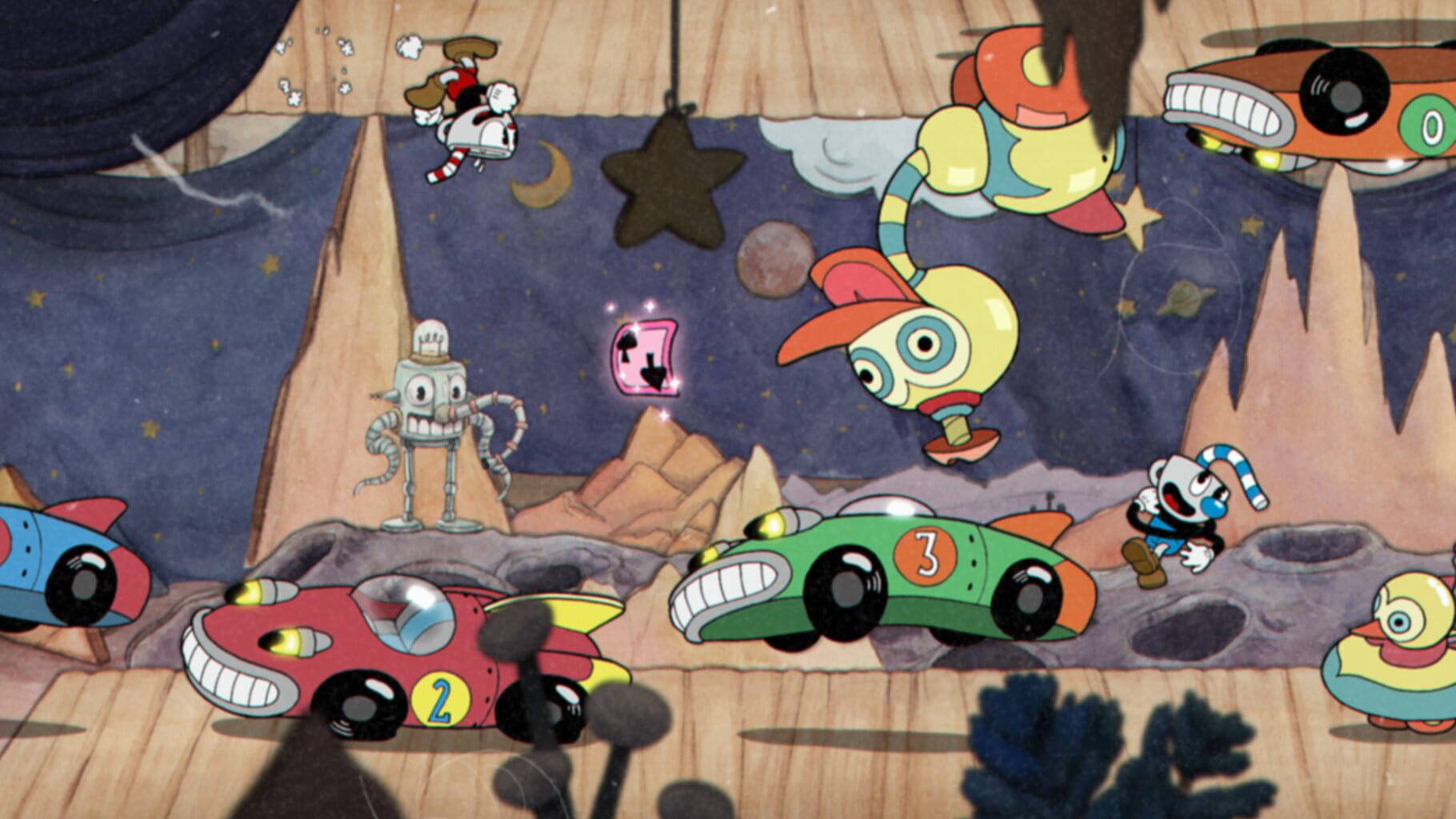
Cuphead Boss Battle Strategies Guide
Master Cuphead bosses with expert tips on patterns, best weapons, parrying, super arts, and winning Expert Mode battles.
Cuphead’s boss battles have a reputation for being as eye-catching as they are difficult. With their vibrant animations and tricky attack patterns, each encounter feels like a test of both reflexes and patience. Players often find themselves replaying fights, gradually picking up on tells, and experimenting with different weapon loadouts to get the upper hand. There’s a real sense of satisfaction that comes from finally conquering those larger-than-life foes, but figuring out the best strategies isn’t always straightforward. For anyone hoping to shave a few attempts off those tougher fights, a closer look at boss patterns, weaknesses, and tactics can make all the difference.
Pattern Recognition: The Secret Sauce to Beating Cuphead Bosses
If you’re stuck on a tough Cuphead boss, pattern recognition is your best friend. Cuphead isn’t about random chaos. Nearly every attack, from the wiggling carrots in Root Pack to the bullet hell antics of King Dice’s minions, follows a sequence. Spotting these patterns means you’re already halfway to victory.
Why Pattern Recognition Matters
At first glance, Cuphead’s battles might seem unpredictable, filled with colorful mayhem. In reality, each boss dances through a series of rehearsed moves. Recognizing these patterns allows you to:
- Anticipate attacks before they happen
- Position yourself safely in advance
- Plan when to parry or use a special attack
- Sense when a boss is about to switch up its phase or tactics
Getting familiar with attack cycles is what separates good runs from game-ending blunders.
Learning Patterns: Observation is Key
Your first few goes at a boss will mostly be about survival. Don’t rush trying to beat them—spend these attempts watching closely. Here’s how to make the most out of those early rounds:
- Focus on the boss, not just your character. Watch for animations that come before attacks (like Hilda Berg’s transformation faces or Grim Matchstick’s tail twitch).
- Monitor the stage hazards. Many backgrounds feature moving platforms or projectiles with set movement paths.
- When you die, recall which attacks hit you and when. Many players instinctively dodge without thinking; try to remember what led to each hit.
Writing down a rough attack order or even recording your runs can help give you a clear sense of what to expect next.
Breaking Down the Phases
Cuphead bosses almost always fight in several stages, with each phase introducing new attacks or twists. Learning to recognize phase transitions triggers lets you prepare.
Tips
- Look for tells: Bosses often pause, change color, or play a unique animation right before entering a new phase.
- Be alert for increased pace: Most bosses ramp up speed or frequency of attacks as they take damage.
- Save your Super Meter: Special attacks are best reserved when you know a new, tougher phase is about to pop.
Visual and Audio Cues
Don’t focus just on what you see—Cuphead’s audio design is packed with hints. Sound effects often accompany attacks (think of Ribby and Croaks’ spinning move or Baroness Von Bon Bon’s minions) and can serve as early warnings.
Keep in mind
- Volume up helps. If you can hear the subtle wind-up before a big attack, you’ll react faster.
- Watch for small details—like a boss character blinking faster or looking directly at you before striking.
Practical Example: Cagney Carnation
Let’s take Cagney Carnation, the flower boss, as an example of patterns:
- Attacks happen in a set order, and each is prefaced by animation: Cagney shakes before shooting seeds, leans left/right before snap attacks.
- The platforms appear and disappear in sequence, never all at once.
- After a certain amount of damage, the flower switches from attacks above to vine whips below—a clear phase change marked by animation and new music cues.
Once you notice these cues, you can plan where to stand, when to jump, and when to unleash a super.
Practicing Pattern Recognition
Improvement isn’t always immediate. Here are some strategies to speed up your learning:
- Learn from repetition. Bosses won’t change their attack order until you hit the final stretch, so the more you play, the more the sequence will stick.
- Pause and analyze. Don’t be shy about hitting pause to collect your thoughts, especially after a failed attempt.
- Try “safe runs.” Purposely avoid attacking to see as many attack variations as possible. This helps map out patterns without the pressure of dealing damage.
Common Pitfalls
Even after spotting patterns, mistakes can happen. Watch out for:
- Tunnel vision. Don’t get locked in on projectiles and ignore the boss’s setup for its next attack.
- Overcommitting to damage. Sometimes it’s safer to focus on dodging through a pattern rather than risking it all for a few extra hits.
Adapting to Subtle Changes
Some bosses start mixing up their order or combining attacks in later phases. When this happens:
- Treat each failed run as a clue-gathering mission.
- Look for small tweaks—was an attack faster, did it come in pairs, were there more projectiles?
- Stay flexible. If one pattern isn’t working, switch positions or try a different weapon that lets you focus more on dodging.
Conclusion: Turning Chaos into Rhythm
Cuphead’s design rewards players who pay attention. Every boss is teaching you to read its behavior. The more you recognize and adapt to patterns, the more the game feels less like random chaos and more like a tightly choreographed dance. Stick with it, and soon those once-impossible bosses become just another victory.
Weapon Loadout Guide
Picking the right weapon in Cuphead isn’t just about dealing damage—it’s about giving yourself the best chance to survive whatever a boss throws at you. Each weapon changes how you approach patterns, positioning, and even phases. This section breaks down every weapon, shows where each shines, and helps you decide what to equip for different fights.
Cuphead’s Core Weapons
You'll unlock new weapons from Porkrind’s Emporium, but you always start with the basics:
- Peashooter: The starter. Decent range, steady rate, average damage.
- Spread: Fires a close-range burst in a cone—big damage up close, but less safe against mobile bosses.
- Chaser: Green homing shots; lowest damage per shot, but lets you focus on dodging.
- Lobber: Bounces projectiles; packs a punch, but is tricky with its curved trajectory.
- Charge: Fires a powerful shot after a brief wind-up. Precision is key, but hits hard.
- Roundabout: Shots fly in a straight line, then boomerang backwards—good for certain angles.
- Converge: Wide, piercing line—great for multi-hit potential.
- Crackshot: Decent homing with a neat secondary ability, added in The Delicious Last Course DLC.
- Twist-Up: Also a DLC addition—vertical spiraling shots, best for airborne bosses.
Weapon Performance: When to Use What
Not every tool is useful against every boss. Here’s a look at the scenarios where each weapon tends to perform best:
Peashooter
Best For: All-purpose use. Great when you have no other upgrades or against bosses where positioning is safe and straightforward.
Strengths
- Straight, reliable shot
- No learning curve
Weaknesses
- Lower damage compared to advanced weapons
- Lacks utility of others
Spread
Best For: Bosses that get close or have big hitboxes. Think Goopy Le Grande (in phase two) or when you can stand right under Grim Matchstick’s mouth.
Strengths
- Massive damage at point blank
- Good at clearing clustered threats
Weaknesses
- Short range means you get right in danger’s face
- Not ideal against highly mobile or distant bosses
Chaser
Best For: Bosses with chaotic patterns or lots of minions that keep you moving, like Hilda Berg or Dr. Kahl’s Robot. Lets you focus mainly on survival.
Strengths
- You can dodge almost constantly, shots still home in
- Good for phases with lots to watch out for
Weaknesses
- Lowest damage per second
- Can tempt you into passive play, which can be risky
Lobber
Best For: Stomping grounded bosses or those with weak spots low to the ground, like Sally Stageplay or Beppi the Clown’s carousel.
Strengths
- High burst damage with well-aimed shots
- Can “bounce” into safe hits
Weaknesses
- Takes a while to get used to the arc
- Easy to miss on vertical bosses or fast-changing patterns
Charge
Best For: Bosses with long pauses or large targets, such as Werner Werman or the Devil’s first phase. Perfect for risky players who can land shots.
Strengths
- Top-tier damage if you’re accurate
- Shots pierce through some obstacles
Weaknesses
- Missing shots punishes you with wasted time
- Slows your movement during charging
Roundabout
Best For: Boss phases that force you to run and shoot backwards, like Djimmi the Great’s sarcophagus or vertical climbing segments.
Strengths
- Shots go out and come back, doubling hitting potential
- Good for awkward angles
Weaknesses
- Mastery requires knowing where shots rebound
- Not as effective at close range
Converge, Crackshot, Twist-Up (DLC Weapons)
- Converge: Best for wide bosses or multi-segment enemies. Pierces, so lined-up targets take serious damage.
- Crackshot: Solid auto-targeting plus powerful alt fire. Good as a “jack-of-all-trades” for unfamiliar battles.
- Twist-Up: Strong against flying bosses or attacks from above, thanks to its vertical spread.
Super Arts: Pairing With Weapons
Super Arts can turn the tide—especially when paired with certain weapons:
- Super Art I (Energy Beam): Great with Peashooter, Roundabout, or Converge; hits everything in a line.
- Super Art II (Invincibility): Best with Spread or Lobber for aggressive, high-risk phases.
- Super Art III (Giant Ghost): Use in long, open phases; works well with Chaser for passive offense.
Consider your super’s strengths and how they line up with weapon ranges and boss arenas.
Weapon Loadouts for Tough Bosses
Some fights almost demand specific loadouts. Here are popular choices for notorious Cuphead showdowns:
- King Dice: Chaser and Spread. Chaser makes minigames easier, Spread melts chip bosses when you’re up close.
- Dr. Kahl’s Robot: Roundabout for the first phase, then Chaser or Peashooter to handle hectic bullet sections.
- Rumor Honeybottoms: Chaser lets you navigate vertical segments with less stress.
- Grim Matchstick: Spread for early phases, Converge or Roundabout for phase three.
- The Devil: Charge for massive hits at range, switch to Roundabout or Spread when things get tight.
Swapping Weapons Mid-Fight
Mastering the swap button is huge. Don’t lock yourself into just one gun—combine short-range power (Spread) with safe damage (Chaser or Peashooter), swapping based on the boss phase or movement. Most players recommend:
- Starting with something fast or homing for the initial patterns
- Switching to Spread or Lobber when the boss is stunned or in a predictable spot
- Using Roundabout for tricky back-and-forth phases
Charms Affect Your Playstyle
Charms like Smoke Bomb, Coffee, or Heart add layers to your loadout. Smoke Bomb’s invincible dash lets you play more aggressively with Spread or Charge. Coffee helps you fire off Supers more often, which pairs well with high-output guns. Always mix charms to cover your weak spots or play to weapon strengths.
Wrapping Up: Crafting Your Loadout
Experimenting beats sticking with “meta” setups every time. Think about boss movement, your comfort with each weapon’s pattern, and how much risk you’re willing to take. Cuphead’s weapon system rewards adaptability: Keep two weapons that complement each other, practice swapping on the fly, and never be afraid to try something weird if you’re stuck. The more you tailor your guns to the fight, the more bosses you’ll conquer without breaking a sweat. Parrying is one of Cuphead’s signature mechanics—a skill that not only looks flashy, but also unlocks crucial advantages during boss fights. Mastering the pink slap lets you charge your Super meter, avoid death, and sometimes unlock hidden phases or shortcuts that would otherwise be impossible. Here’s how to sharpen your technique and use parries to turn the tide in any boss battle.
The Basics of Parrying
Parrying in Cuphead is all about timing. Any pink object—be it a bullet, platform, or puppet—can be parried with a well-timed jump. To parry, jump toward the pink item and press the jump button again in midair right as you reach it. Your character will do a quick midair slap animation, bounce slightly higher, and (most importantly) fill one card of your Super meter.
Why Parry?
- Super Meter Gain: Every successful parry fills one EX card. More EX cards mean more supers, which can decide close battles.
- Avoiding Harm: Many attacks are easier to parry than dodge, especially when the screen gets crowded.
- Access to Secret Paths: Certain pink objects, like platforms in Djimmi the Great’s stage, must be chained together to proceed.
- Reviving Partners: In co-op, parrying a partner’s ghost brings them back to life, making this skill a literal lifesaver.
Basic Parrying Technique
When you spot a pink object, don’t rush things. Wait until you’re just about to touch it, then hit jump again for a clean parry. If you tap too early or too late, you’ll take damage instead. Start with stationary pink objects (like Goopy Le Grande’s pink question mark punches) to get the feel for the timing. Once you’re comfortable, move on to faster or less predictable targets.
Advanced Parrying Tips
Chaining Parries
Some bosses throw multiple pink projectiles in a row, or platforming sections feature a series of pink clouds or cards. To parry them all, you need to tap jump at each new target, catching the rhythm as you go. Try practicing on Ribby and Croaks’ pink fireflies or King Dice’s conveyor belts.
Parrying for Platforming
Certain stages include vertical segments where the only way up is by parrying from one pink platform to the next. Examples include Djimmi’s pyramid maze or Rumor Honeybottoms’ honeycomb. Remember, each successful parry gives you a small altitude boost, so stringing them together lets you climb beyond what a normal jump can do.
Parries Under Pressure
Bosses like Dr. Kahl’s Robot or Cala Maria can fill the screen with hazards and give you only a split second to react to a pink bullet. To handle this, train yourself to spot pink objects out of the chaos—keep your peripheral vision engaged, and treat every pink attack as a parry opportunity, not just another dodge. Sometimes, a well-timed parry launches you over a dangerous hitbox or even lets you reposition in mid-fight.
Parrying Projectiles vs. Platforms
- Projectiles: Move in the direction the bullet is going for easiest timing. Jumping toward a pink bullet and hitting parry just as you “touch” works best.
- Platforms: Time your second jump when you’re directly overhead. This makes climbing pink clouds or cards much more consistent.
Boss-Specific Parry Opportunities
- Goopy Le Grande: Parry his pink question marks for easy EX cards.
- Ribby & Croaks: Pink fireflies and boxing gloves show up in early phases.
- Baroness Von Bon Bon: Her castle’s turrets sometimes shoot pink mints.
- Djimmi the Great: Many phases have pink swords or platforms.
- Grim Matchstick: Pink drops in the rain phase, and pink clouds for platforming.
- Sally Stageplay: Pink jumping roses are meant for well-timed parries.
Look for these in every fight—Cuphead often hides parry targets amid all the colors.
Parrying in Plane Levels
Plane control changes jumping to your Y-button or dash. In aerial battles (like Hilda Berg, Wally Warbles, or Dr. Kahl’s Robot), you parry with a barrel roll instead of a jump. The principle’s the same: tap the special button as you contact a pink object and you’ll slap your way to an EX boost. Some plane boss phases can only be “solved” efficiently by racking up parries.
Charms and Parrying
- Coffee: Automatically fills your super meter slowly, but still rewards parries. Good if you struggle to parry under pressure.
- Smoke Bomb: Lets you focus more on dodging, but doesn’t affect parrying itself.
- Heart/Extra Heart: More hit points let you take more risks practicing parries.
None of these make parrying easier directly, but mixing in Coffee can make the timing mistakes less punishing for new players.
Practice Makes Perfect
If parrying still feels awkward, try King Dice’s minigames or the Run ‘n Gun stages. Both toss lots of low-risk pink objects your way. The more you practice, the more muscle memory you’ll build—eventually you’ll parry on instinct, grabbing those EX cards while dodging a dozen other threats.
Final Thoughts
Learning to parry well opens up new strategies and increases your survivability in every Cuphead fight. Start slow, practice your timing, then get creative with chained parries and tricky bosses. Parrying isn’t just an extra skill—it’s the secret sauce behind top scores and those elusive S-ranks. Keep at it, and soon you’ll be slapping your way through even the toughest boss patterns.
Super Arts Mastery
Super Arts in Cuphead are your game-changing power moves—the highest form of offense and defense you get from filling your super meter. Each one offers a distinct effect, and choosing the right Super Art (and knowing when to activate it) can swing a boss fight in your favor. Here’s everything you need to know about unlocking, using, and mastering all three Super Arts.
What Are Super Arts?
Super Arts are special moves activated when your super meter is full (five cards). To use them, simply press the Super button. They’re a step above regular EX moves, often dealing more damage, granting temporary invulnerability, or providing powerful support.
Before you can use these, you need to unlock them by completing special Mausoleum levels scattered through the game. Each Mausoleum grants a new Super Art and provides a scripted parry challenge to boot.
Unlocking Super Arts
- Super Art I: Energy Beam
- Location: Mausoleum I (Inkwell Isle One)
- Challenge: Fend off waves of ghosts using parries before they touch the chalice. No attacks allowed.
- Super Art II: Invincibility
- Location: Mausoleum II (Inkwell Isle Two)
- Challenge: More aggressive ghosts and trickier patterns. Sharpen your reflexes!
- Super Art III: Giant Ghost
- Location: Mausoleum III (Inkwell Isle Three)
- Challenge: Fastest waves yet, with ghosts sometimes dodging up and over.
Each Mausoleum introduces new parry tricks that help for boss fights. Practice here, and you’ll get muscle memory for real battles.
Super Art I: Energy Beam
How it works
Cuphead or Mugman blasts a giant horizontal beam across the screen, dealing massive continuous damage to anything in its path. It instantly clears most small threats and chunks huge amounts off boss health bars.
Best uses
- When a stationary boss is between phases (e.g., final phase Grim Matchstick).
- Against tightly-packed enemies or layered boss parts.
- As an emergency “screen clear” during overwhelming bullet hell segments.
Tips
- Position yourself so as many boss or mini-boss targets are in the beam as possible.
- Be careful not to use it during sequences when a boss is about to become invulnerable or move off-screen—you’ll waste your shot.
- You’re locked in place while firing, so only activate when safe from incoming attacks.
Super Art II: Invincibility
How it works
Your character becomes immune to all damage for a short period. During this time, you’re free to dodge through attacks, reposition, or attack at close range.
Best uses
- Surviving dense attack barrages or “panic moments” when nowhere is safe.
- Escaping from tight corners or after a bad jump.
- Rushing in for high-risk attacks (like Lobber or Spread shots) without fear.
Tips
- Time your invincibility for the nastiest attack waves, especially final phases.
- It won’t deal direct damage, so maximize your regular attacks while invincible.
- Invincibility cancels if you get knocked out mid-super, so always have a plan.
Super Art III: Giant Ghost
How it works
Summons a spectral version of your character which floats slowly forward, dealing heavy damage to anything it touches. You can guide its movement by moving yourself—your ghost mirrors all your moves a short distance away.
Best uses
- Bosses that hug the screen’s sides or move vertically (King Dice, Dr. Kahl’s Robot).
- Multi-phase encounters where positioning the ghost covers multiple threats.
- When you can distract bosses with the ghost while keeping yourself safe.
Tips
- The ghost only damages enemies while moving, so keep yourself moving.
- The ghost vanishes if you die; stay alive to get its full value.
- Can break through dense patterns and mop up minions at the same time.
Super Art Tips and Advanced Tactics
Timing Is Everything
Don’t just use your Super Art the moment it becomes available. Watch your boss’s phase patterns—some become briefly invincible or reset their position, so it’s easy to waste your meter if you fire too early.
Pairing with Weapons and Charms
- Spread + Energy Beam: Activates just as you’re up close for massive single-phase damage.
- Lobber + Invincibility: Lets you get in close and launch dense shots worry-free.
- Chaser + Giant Ghost: Lets you focus on moving your ghost for maximum damage while Chaser auto-targets.
Charms like Coffee can help you charge your meter faster, giving you a second or even third Super Art in tough fights.
When to Use EX Moves Instead
Sometimes, picking the right moment for single-card EX moves is smarter than saving for a full Super Art. If a fight has too much movement or too few opportunities for big bursts, EX attacks may outpace sporadic supers.
Plane Levels and Super Arts
In airplane stages, your Super Art changes: instead of the three Cuphead/Mugman supers, you summon a giant bomb (by default) that clears the path ahead. The same charge-up rules apply: build your meter with parries and shots, and unleash for major damage or defense.
Tips for plane-level supers:
- Aim your bomb carefully; it flies straight, so wait for the boss to line up.
- Use it to wipe out tough minions or as a last-ditch save in crowded phases.
Mistakes To Avoid
- Firing Super Art I at shifting or dodging bosses—patience pays off!
- Burning Super II invincibility just to dodge a single weak attack.
- Neglecting the ghost's path with Super III—if you don’t move actively, you lose tons of damage.
- Forgetting you can parry during a super if pink objects show up.
Practice and Preferences
Try out all three Super Arts as soon as you unlock them. Each boss has phases and patterns that favor one super over another. Experiment in early fights and adjust your loadout if you hit a wall.
Use Mausoleum parry training to test your reaction speed—it’ll prep you for real fights.
Conclusion
Mastering Super Arts is about more than just filling your meter. Pick the right super for each boss, time your attacks carefully, and practice until you know every phase inside and out. Whether clearing a screen, dodging unbeatable barrages, or unleashing spectral havoc, solid Super Art skills can turn even the hardest Cuphead bosses into manageable challenges.
Expert Mode Strategies
Cuphead’s Expert Mode ramps up the chaos, transforming even familiar bosses into monsters that shred careless players in seconds. Every attack comes faster, projectiles fill the air, and phases can feel unrecognizable. If you want that sweet S-rank or those final achievements, it’s time to shift your thinking. Here’s how to stay one step ahead when the heat turns up.
What Changes in Expert Mode?
Before getting fancy with tactics, know what you’re up against. Expert Mode doesn’t just make enemies hit harder. Here’s what you’ll see:
- Faster Movement & Attacks: Everything’s cranked up. Patterns speed up by roughly 25–30%, and projectiles move a little faster.
- More Health for Bosses: They take longer to go down, so fights last longer and there’s more time for mistakes.
- Extra Projectiles and Minions: Many bosses throw in extra attacks or summon more minions, sometimes combining moves that were separate on Regular or Simple difficulty.
- Shorter Windows for Parries: Precision timing matters even more.
General Tips for Surviving Expert
Even before you lock in a loadout, apply these strategies:
Memorize Patterns
Bosses add attacks, but 90% of survival comes from knowing each phase’s behavior. Study both Regular and Expert patterns using practice mode. When something new appears, focus on learning its timing before running for damage.
Don’t Chase S-Rank Until You’re Comfortable
Getting through a level alive is your first goal. Worry about perfecting your score—like parry count, supers, and no-hits—once you know every wrinkle in the fight.
Play Safe With Charms
Use Smoke Bomb for longer iframes to escape impossible dodge scenarios, or try Heart or Twin Heart charms for extra HP. The damage trade-off is usually worth it in the learning phase.
Prioritize Staying Alive Over Damage
Sometimes holding off on a full Spread assault or Lobber barrage is smarter than risking a death. Staying calm during wild patterns will take you further than trying to rush a boss down.
Loadout Optimization Tips
On Expert, weapon and charm choices become super important. Adapt your choices to each fight:
High-Damage Weapons Are More Valuable
- Spread: Perfect for finishing short-range phases when you can risk the closeness.
- Lobber: Great supplemental damage in safe windows, plus its arcs help you avoid ground-based threats.
- Roundabout: Fire from a distance, and let the boomerang pattern score hits behind you as you dodge.
Chaser Isn’t Always the Best
Chaser is a lifesaver when focusing on dodging, but its low damage usually can’t keep up with longer, rougher Expert fights. Only use Chaser if you seriously can’t keep up with regular aiming.
Charms to Prioritize
- Smoke Bomb: Lets you dash through solid objects and attacks. Almost mandatory in boss encounters with jam-packed patterns.
- Coffee: Recharges your super meter automatically—essential for getting Super Arts out when attack windows are short.
Boss-Specific Advice
Let’s break down some common traps and solutions for a few of Cuphead’s trickiest Expert Mode bosses:
The Root Pack (Botanic Panic)
- Expert Reality: All veggies attack much faster. The onion cries more tears, and the carrot litters psychic carrots everywhere.
- Strategy: Use Spread or Roundabout for the potato and onion. Always be moving to avoid carrots. Parry the pink tears/leaves to keep super meter building.
Ribby and Croaks
- Expert Reality: More spiked balls, aggressive fire attacks, coins move faster in the slot phase.
- Strategy: Stand mid-screen during frog phase for easier frogball dodging. In slot machine form, aim for as many parries as possible and use invincibility if attacks overlap.
Baroness Von Bon Bon
- Expert Reality: Candies spawn more often, and the castle’s attacks get faster. Bon Bon herself uses her head attack sooner and fires extra projectiles.
- Strategy: Spread and Lobber deal with minions fast. Watch for double attacks—don’t corner yourself. Saving invincibility for her “head-off” rush is wise.
Grim Matchstick
- Expert Reality: Fireballs break into more minifires, clouds zip by, tail whips are faster.
- Strategy: Chaser helps when cloud movement gets tight, but use high-damage weapons between patterns. Smoke Bomb will save tons of lives on tight platforms.
Dr. Kahl’s Robot
- Expert Reality: Everything hits harder and faster; the minions bombard the screen constantly.
- Strategy: Memorize laser and missile timings. Save bombs and supers for the hardest waves, and don’t forget you can shrink for tighter dodges.
Advanced Tactics: Maximizing Surviving and Scoring
Learn “Damage Racing”
Some bosses let you deal damage even while attacks overlap. If you know you’re about to reach a new phase, go all in with heavy shots or supers. Trading a life for a chunk of health isn’t always a loss.
Multi-Parry Phases
Pack in as many parries as possible early in the fight. This not only builds your super meter but also helps you stay on pace for S-rank goals.
Don’t Panic-Use Your Super
Aim for big, safe windows in late phases where you know the boss is open. Resist the urge to use Super Art the minute you fill your meter—wait for rooms or stagger phases so you don’t waste it.
Practice in Co-op Mode
Expert Mode is even tougher with two players (more health and extra attacks). Stay apart during complex attacks, but call out targets. If your teammate goes down, prioritize a revive even if you have to take a hit.
Momentum: Staying in Control
Don’t let a failed dodge or unlucky projectiles rattle you. Even masters die dozens of times on Expert bosses. Focus on the small victories—dodging a new pattern, surviving an extra minute. Learn in slices, and you’ll finish the game’s toughest challenges.
Conclusion
Expert Mode turns Cuphead into a test of precision and endurance. Every attack ramps up, so bring patience to the fight. Use safe loadouts, learn patterns first, and only push for perfect ranks when you’re ready. With a cool head and sharp reflexes, you can overcome the wildest patterns Cuphead throws your way. Good luck out there—keep those fists up and never let the salt get to you!