DayZ Common Mistakes: Beginner Traps and How to Avoid Them
Five mistakes that kill new DayZ players fast, from noisy looting to ignoring toxic zones, and how to avoid each one.
DayZ doesn't really tutorialize anything, so most new players learn by dying. That's fine once or twice, but a lot of those early deaths come from the same handful of fixable mistakes. SPRINT-jogging through a town with ten infected behind you, stuffing your bag until you can't run, walking into green smoke because it looked cool. All of it avoidable. Here are the five traps that catch fresh spawns the most, and what to do instead.
Looting Too Loudly Near Zombie Clusters
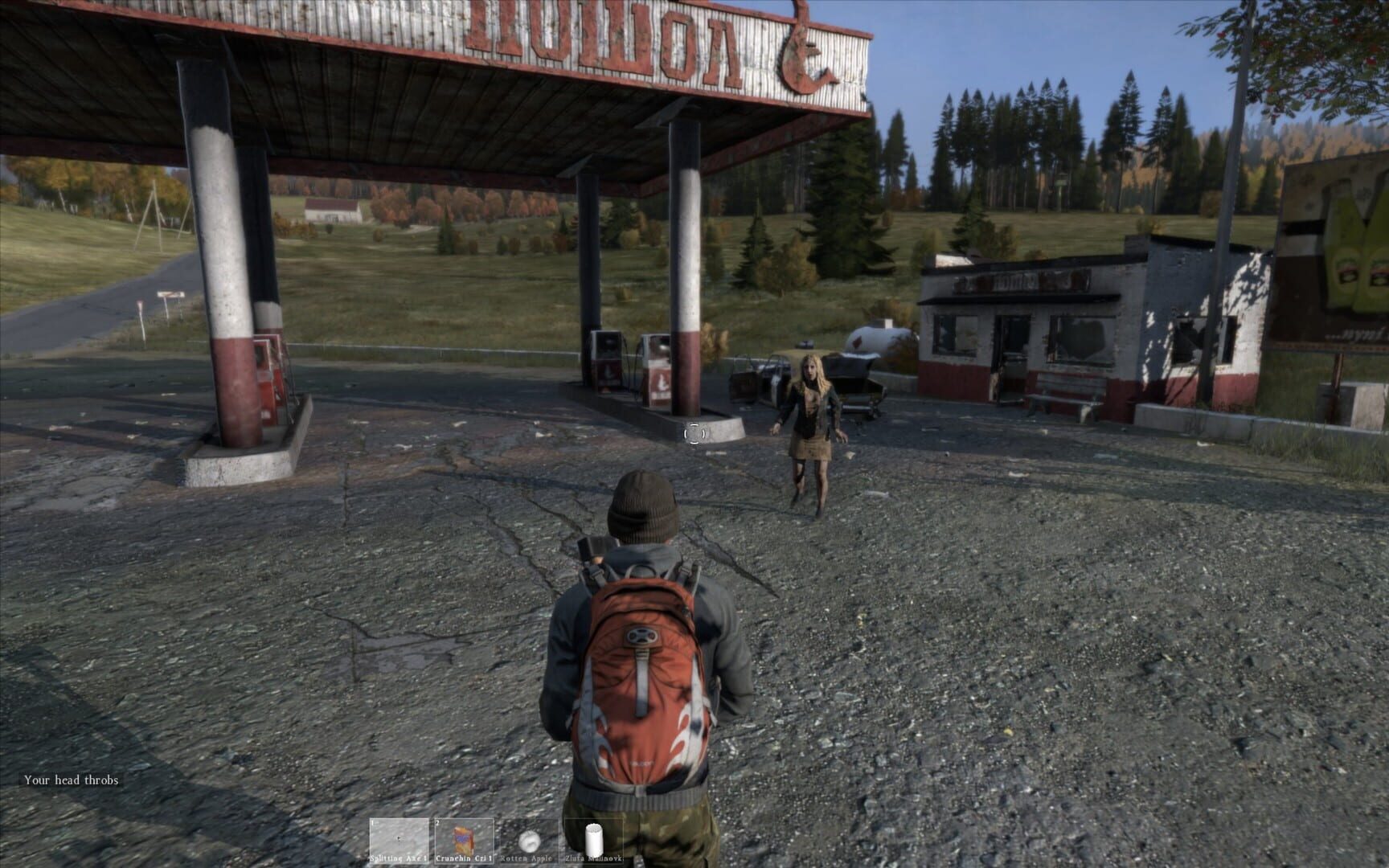
Infected in DayZ hunt with their eyes and ears. Walk upright through the middle of a town and every shambling thing in a hundred meters gets curious, because movement and noise are exactly what they're built to pick up. Sprinting is worse. Cracking off a loud gun is worst of all, since a gunshot pulls infected from way out, and you'll often get swarmed by ones you never even saw.
The key thing to understand is that infected have states. When one first notices something, it does a little grunt and goes into a search mode. It looks toward where it thinks you are, and if it can't see you but heard you, it walks to that spot. If it can't confirm you exist, it eventually shrugs and goes back to wandering. If it does confirm you, it shrieks and starts the chase. So the whole game is staying in that "was that something? eh, probably not" zone.
Practical habits that keep you there:
- Crouch-walk through towns. It's slower, yes, but the noise footprint drops hard. Crouch sprinting still costs stamina (about 1 per second versus 4 standing), so use it in short bursts.
- Watch an infected's facing before you move. They have a real field of vision, and coming at one from behind makes sneaking up surprisingly easy.
- If one goes into search mode near you, freeze or drop prone. Staying still and quiet while it's searching often resets it, as long as you're a bit far off.
- Melee over guns whenever you can manage it. A knife is the classic tool here, partly for the low stamina cost per swing, and partly because a knife stealth kill on an unaware infected is instant and doesn't alert the neighbors at all.
- Thrown items work as distractions. Chuck a tin can or a rock away from your path and infected will wander toward the noise instead of you.
Also know your escape tools for when it goes wrong anyway. Breaking line of sight around building corners or through evergreen trees makes them mill around your last known spot for a bit. Infected can't climb ladders or open doors, so hopping onto a car, up a ladder, or shutting yourself in a room buys time. And hit to the legs sometimes turns them into crawlers, which are annoying to hit with melee but slow.
One more trap inside this trap: police and firefighter infected hit harder than civilian ones, and soldier types at military areas have more health and damage. If you're going to fight, pick civilian ones and go for the head.
Ignoring Server Time and Night Cycles
Every DayZ server runs its own clock, and most of them accelerate it. You'll commonly see settings like serverTimeAcceleration=12 and serverNightTimeAcceleration=1 in a server config, which boils down to a full in-game day passing in a fraction of real time, often 2 to 4 hours. So "it was bright out five minutes ago" can genuinely become pitch black while you're mid-loot-run. New players get blindsided by this constantly.
The practical problem is that night changes everything. Visibility collapses, infected can still hear fine, and any light you carry becomes a beacon for every player in the area. Flares, flashlights, head torches, even your character's personal light on servers that leave it enabled, all of it says "shoot here."
What to actually do:
- Check the server's day/night setup before joining if the server list or launcher shows it. Plenty of communities advertise "day only" or "bright nights" servers, which are a completely fair choice while you're learning.
- If night catches you out, don't panic-loot. Loot in the dark is slow loot, and slow loot in the open is how you die to someone you never saw.
- Use light discipline. A flashlight beam on a wall is visible forever. If you need light, keep it low, keep it brief, and shield it with your body when you can.
- Learn the sky. On a clear night you can find Polaris, the North Star, which sits roughly north, and the Big Dipper next to it makes finding Polaris easier. That's a real compass that never runs out of batteries or inventory slots.
- The moon helps too. A full moon night can be bright enough to jog through, while a new moon is near-black. Some servers also run "brighter nights" as a config option, so darkness isn't uniform across servers.
Daytime has a matching trick worth knowing. The sun comes up roughly in the east and sets roughly in the west, so before you've found a compass, a glance at the sky plus the time of day gives you a bearing. It's not pinpoint accuracy, but it beats guessing.
The bigger point: plan your session around the cycle. If the server's about to flip to night and you're a fresh spawn with a wrench and a dream, that's a fine time to hole up in a small house, cook, and wait. Pushing a military base at midnight with no night vision is usually just donating your gear.
Ignoring Container and Backpack Contamination
This is the one that kills geared players, not just fresh ones. Contaminated zones are areas filled with toxic PO-X gas, marked by green smoke, and they exist in two flavors: static ones that are always poisoned, and dynamic ones that can appear temporarily when artillery events dump gas on an area. Chernarus and Livonia each have roughly 8 or 9 static zones, and the loot inside is genuinely top tier, which is exactly why people wander in.
Walk into the gas without protection and the damage starts almost right away. Your screen tints, you cough, health drains. Get poisoned and it runs in stages:
| Stage | After | What happens | | --- | --- | --- | | 1 | On entry | Your blood becomes tainted, so any blood drawn from you is no good for transfusions | | 2 | ~25 seconds | Coughing every 20-40 seconds for 50 blood damage, vomiting every 3-5 minutes for 250 blood damage | | 3 | ~1 minute 20 seconds | You get knocked out and take damage every second until dead |
Stage 3 is a death sentence unless someone helps you. A PO-X Antidote injector cures stages 1 and 2 outright, and pulls a stage 3 victim back to stage 2. Clean IV blood bags also work but you might need a few of them, since each transfusion only knocks the severity down partway.
Now the part beginners miss: it's not just about wearing a mask. The full kit is a gas mask with a good filter plus NBC suit pieces (hood, jacket, pants, gloves, boots). Any uncovered body part can start bleeding in the gas, and bleeding inside a zone gives you gas poisoning even with protection on. The poison scales with the number of cuts you've got, so a slashed arm you ignored back in town suddenly matters a lot.
And here's the container trap specifically. Loot you pull out of a contaminated zone, and gear stripped off bodies inside it, can carry contamination with it. Stuff a tainted jacket into your backpack and you've packed the poison along with the loot. Then you're wearing your nice clean gear a kilometer away and still coughing, wondering how. So:
- Handle zone loot with gloves on, and check items before they go into your main bag.
- Keep a separate container or bag for anything suspicious from a zone, or just don't loot containers in there without a plan.
- Carry spare filters. A regular Gas Mask Filter degrades with use, and once it's spent the mask does nothing. Combat gas masks have a built-in filter that lasts longer, around an hour of use.
- Take the mask off when you don't need it. It blocks eating and drinking, messes with your vision, and with a filter attached it slows your stamina recovery and makes stamina drain faster.
- Bring a Tire Repair Kit or Epoxy Putty. It sounds silly, but those are the actual repair tools for a damaged gas mask, and a wrecked mask is as useless as no mask.
If you see green smoke and you're not kitted out, the correct play is to leave. The loot isn't going anywhere and neither are you, if you walk in.
Overloading Inventory Before Checking Stamina
Stamina is one of those systems new players don't even notice until it kills them. Everyone starts with 100. It covers sprinting, jumping, melee swings, holding aim steady, the works. The trap is that your maximum stamina shrinks as you carry more weight, so "loot everything" quietly turns you into a character who can't sprint more than a few steps.
The wiki numbers are exact, so here they are:
| Weight carried | Effect on max stamina | | --- | --- | | Up to 6 kg | No penalty at all | | Every 1 kg past 6 | -1.75 max stamina | | Penalty cap | -95 (leaving you 5 max stamina) |
Run the math on a typical greedy loadout. Say you're hauling 30 kg total. That's 24 kg past the free allowance, which is about 42 stamina gone, leaving a max of 58 before you've done anything. At 40 kg you're down to roughly 40 max. Carrying a truly silly 60 kg basically flattens you to single digits.
The thresholds that matter in a fight or a chase:
| Stamina below | You lose | | --- | --- | | 25 | Sprint and heavy attacks | | 20 | Jumping | | 10 | Holding breath to aim | | 8 | Dodging |
Losing sprint below 25 is the killer. That's the exact moment a chase goes from "annoying" to "I'm getting beaten to death by five infected and my legs don't work." Jumping matters too, since vaulting a fence is how you break line of sight in towns.
Recovery is generous if you let it happen: about 5 per second resting, 4 walking, 2 jogging. From empty to full while standing still takes around 20 seconds. Sprinting itself costs 4 per second standing, so an overloaded character with 20 max stamina sprints for five seconds and then gasses out.
So build the habit early:
- Check your stamina bar before you commit to a town, not during the chase.
- Treat heavy junk as heavy junk. A spare fire axe, three canned foods you won't eat today, and a second rifle "just in case" all add up fast.
- Drop weight the second things go bad. Your max stamina jumps up the moment you ditch the load, though the bar itself still has to regen to the new cap.
- Favor light storage. Field backpacks and clothing with good capacity-per-kilogram keep you mobile. Some mid-tier clothing is way heavier than it's worth.
- One melee weapon, one gun, food you'll actually eat soon, and medical basics beats a museum collection every time.
A light character with 90 max stamina can sprint between cover, jump fences, and swing away in a fight. A heavy one can't do any of it. Same player, same skill, the difference is just the shopping habits.
Skipping the Map Before Committing to a Route
Chernarus is big and it mostly looks the same. Pine trees, a dirt road, another hill of pine trees. New players spawn on the coast, pick a direction that feels right, and walk. Two hours later they're lost, starving, and nowhere near anything useful. Route planning is the difference between a productive run and a very long nature walk.
The good news is the game hands you navigation tools for free if you know where to look:
- The coast. On Chernarus the coastline runs along the south and east edges. If you can see the ocean, you already know roughly where you are and which way is which.
- Road signs. Towns have signs with the settlement name right on them, and road signs point toward other towns with distances. Match a name to a map and you're located.
- Railroads. On Chernarus and Livonia the tracks run to or through settlements, and train stations have the town name on the front. Following a rail line basically guarantees you'll hit civilization eventually.
- Power lines. The high-voltage network stretches across nearly the whole terrain in long straight cuts through the treeline. Pick one up and stay on it and you'll find a town sooner or later. They're also just handy handrails for keeping a straight bearing in fog or forest.
- Hiking trails. Thin dark paths with colored badges on trees and rocks, plus signposts and trail stands. The big trail maps even mark your current spot on them.
For actual tools, the compass is the MVP. It's a common spawn at hunting and camping locations, weighs almost nothing at 190 g, and when you hotbar it, it keeps orienting to where you're facing. There's also the orienteering compass, the GPS receiver (shows your coordinates when it's got a 9V battery), and binoculars or a rangefinder for spotting landmarks from ridge lines.
If you'd rather use your phone, the community map apps (iZurvived being the big one) cover every official map with loot tiers and town names. That's not cheating, it's just replacing the paper map your character never found.
Now the actual route-planning part, because having a map and using one are different skills:
- Before leaving the coast, pick two or three target towns in a line, not one far-off dream destination. Small inland towns are usually picked cleaner on the coast itself, and the walk inland gets you off the fresh-spawn murder strip.
- Chain your water. Routes that pass wells keep you alive; routes that don't, don't. On most maps, inland towns have wells you can drink from freely, and that beats hauling a stack of bottles.
- Match ambition to gear. A spawn with a blunt object shouldn't be routing through a military base. Hit houses, sheds, and the smaller villages first, then aim bigger once you've got a weapon, food, and a bag.
- Count landmarks, not minutes. "Two towns north, then follow the power line east at the red barn" survives a wrong turn. "Walk 20 minutes that way" doesn't.
- Leave yourself an out. A route that runs along the coast or a road can be reversed when things go sideways. A route straight through the deep woods can't.
The last and cheapest trick: glance at the sun. Rising roughly east, setting roughly west. Combined with the coast and one confirmed road sign, you can usually pin your position well enough to pick a target and actually get there.
Plan the route, keep the load light, watch the clock, mind the smoke, and loot like you're trying not to be heard. Those five habits cover most of the ways DayZ kills new players in the first few hours.