Civilization VI Beginner Guide: How to Win Your First Game
How to pick a civilization, settle your capital, handle the first 50 turns, and balance science, culture, and gold in your first Civilization VI game.
Civilization VI dumps about six systems on you in the first ten turns and then politely asks what you'd like to build. There's a tech tree, a civics tree, districts that go on the map instead of inside the city, housing, amenities, envoys, and a barbarian problem that shows up right about when you're still figuring out the UI. Most first games are lost by turn 60 and it takes another 200 turns to notice. The fix isn't mastering all of it. It's getting five or six decisions right early, because those compound for the rest of the run.
Difficulty's worth a quick word first. Prince is the default and it's fair - no bonuses for anybody. Settler, Chieftain, and Warlord actually tilt things your way, so there's no shame in starting there while the systems click. This guide assumes a standard-rules, Ancient Era start on a normal continents map.
Choosing a Civilization and Leader for Your Playstyle
Every civ in VI has two separate abilities - one for the civilization and one for the leader - plus a unique unit and usually a unique district or building. That's four things to evaluate, and for a first game you want the ones that work no matter what you mess up.
The picks that forgive mistakes
Rome under Trajan is the classic recommendation and it holds up. Trajan's Column gives every city you found a free building in the city center, which is a Monument when you start in the Ancient Era - that's +2 Culture per city, every city, for zero production. The civ ability, All Roads Lead to Rome, hands every city a Trading Post and auto-builds roads back toward the capital, so your new settlements are connected without you ever building a road. The Legion unique unit rolls in with 40 Combat Strength and can even build forts and repair improvements. Rome is basically the game with training wheels that are also good.
Japan under Hojo Tokimune is the other beginner favorite. Meiji Restoration gives districts a full +1 adjacency bonus for each neighboring district instead of the usual +0.5. Translation: pile your districts next to each other and they all get better, no terrain roulette required. Every other civ has to hunt mountains for a Campus or rivers for a Commercial Hub. Japan just clusters. It also teaches you the single most important habit in the game - planning district placement before you settle.
Russia under Peter is strong and hard to ruin. Mother Russia claims extra territory (about five tiles) every time you found a city, plus bonus Faith and Production from tundra nobody else wants. The Lavra, their unique Holy Site, costs roughly half the normal version. Free real estate and a cheap district make even sloppy play feel okay.
Germany under Frederick Barbarossa is the production pick - Free Imperial Cities gives each city one extra specialty district beyond what its population allows. Solid, but it leans on you already understanding districts, so maybe third or fourth game.
Who to skip for now
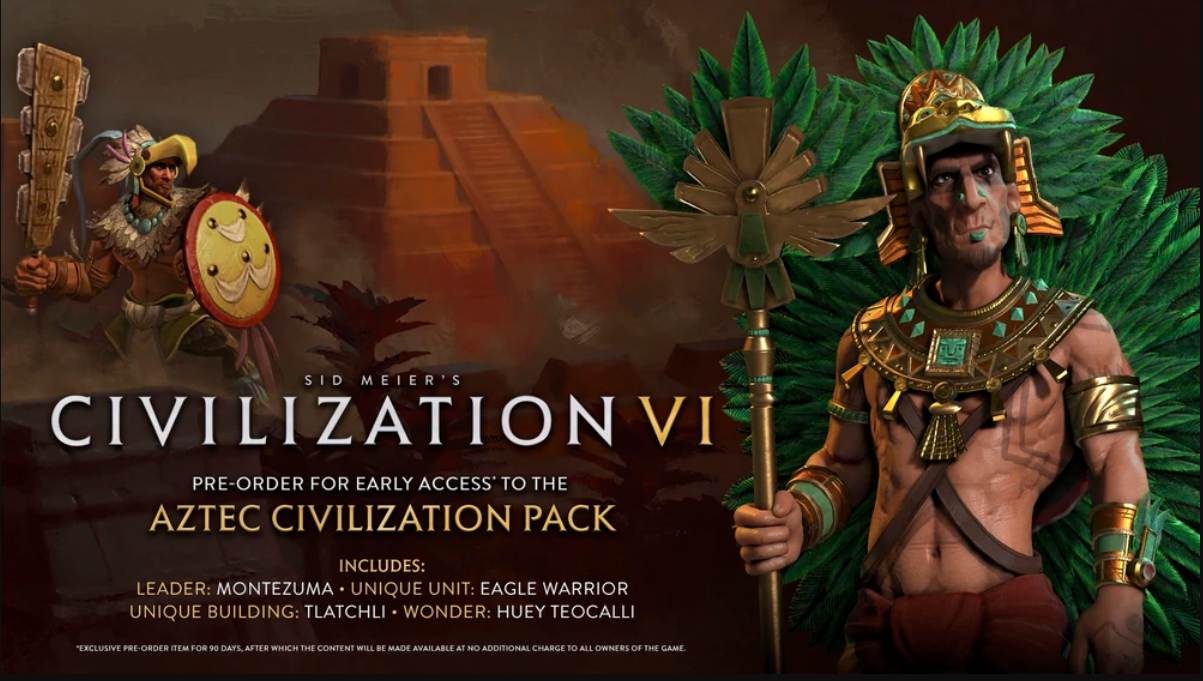
Leave the hyper-specialized civs alone until the basics are comfortable. Korea's Seowon is a monster for science but the civ plays one note. Norway wants naval raids. Aztecs want early war. Gaul, Maya, Phoenicia - all fun, all built around one specific loop. A first game has enough going on without also babysitting a gimmick.
One more thing: civ choice matters less than you think on the lower difficulties. A clean Rome game beats a fumbled Korea game every time. Pick something simple, learn the turns, and try the fancy stuff later.
Match the civ to the victory you want
You don't need to pick a victory type on turn one, but around the Renaissance you should have a direction, and it helps if your civ points that way naturally. Rome and Japan are flexible enough to win any of them. Russia drifts toward religion or culture. If you genuinely don't care, science victory is the most straightforward - the game literally gives you a checklist of projects to finish, and nothing about it requires out-thinking the AI in diplomacy.
Settling Your Capital in the Right Spot
Your capital site is the biggest single decision in the game. You'll spend the next 300 turns working the tiles around it.
Water first, always
Housing caps how big a city can get, and your starting water source sets the baseline. Fresh water - a river, lake, or oasis next to your city tile - starts you at 5 Housing. Coastal water gets you 3. No water at all gets you 2, and a city that starts at 2 Housing grows painfully slow right out of the gate.
Here's the part that sneaks up on new players: growth doesn't just stop at the housing cap. Two or more pop below the cap, you grow at full speed. One below, growth drops to 50%. At the cap, 25%. You can claw five citizens past the limit and then the city just stops. So a no-water capital isn't unplayable, it's just quietly running at half speed for the first third of the game while everyone else pulls ahead.
Rivers are the answer. Besides the housing, they're defensible (enemy units eat a movement penalty crossing), they boost Commercial Hub and Holy Site adjacency, and they let you build the water mill early. If there's a river within a couple turns of your starting warrior and settler, walk to it.
Read the tiles around the spot
The city center itself always gets a floor of 2 Food and 1 Production no matter what. A plains hill start keeps an extra point, so your center sits at 2 Food / 2 Production - small, but it's every single turn for free. Settling directly on a luxury or strategic resource is usually good too; you get instant access and can trade the surplus.
What matters more is the ring of tiles you'll actually work. Cities work tiles within three spaces. Look for:
- A mix of food and production. Two or three good food tiles (grassland, wheat, cattle, rice) keep growth moving, and hills and woods give the production for builders and settlers.
- Two or three hills. Production is the thing you'll be short on for the first 60 turns.
- A luxury resource or two. Each unique luxury feeds +1 Amenity to up to four cities, and amenities are the quiet failure state of a lot of beginner empires.
- Coast, if the start offers it. Coastal capitals can build harbors and ships, though coastal tiles are food-heavy and production-light, so a pure coast start is slower than it looks.
Don't overthink the perfect spot. A good river spot on turn one beats a perfect spot found on turn eight, because those lost turns of yields never come back. Move at most two or three turns, then plant.
Look one era ahead
Districts go on the map, so your capital spot decides where they can go. Before you settle, glance around: are there mountains nearby (Campus and Holy Site adjacency), rivers (Commercial Hub), or flat open ground you'll want for districts later? A city hemmed in by desert and mountains can look great on yields and still have nowhere to put anything.
Early Turn Priorities for Growth and Defense
The first 50 turns basically decide the game. Nothing here is glamorous. It's scouts, a couple of military units, and settlers.
Turn one: scout
Build a Scout first in almost every game. The map starts dark and the rewards for opening it up are real - Tribal Villages hand out free stuff (gold, a builder, tech and civic boosts, sometimes a relic) to whoever touches them first, and finding city-states and other civs early unlocks envoys and trade. A Warrior can scout in a pinch, but a Scout covers two or three times the ground.
Most experienced players run Scout into Slinger into Settler, sometimes Scout Scout into Settler if the map's wide open. The Slinger exists because barbarians are coming whether you like it or not.
The barbarian mechanic you have to know
Barbarians spawn from outposts, and every outpost starts by producing a Scout. If that Scout sees your city, it turns around and runs home - you'll spot the exclamation mark over its head. Once it gets back, the outpost starts pumping out units aimed at you.
So the rule is simple: if you see a barbarian Scout near your borders, kill it before it reports back. Catching it one turn from home saves you a war. If it does get away, don't panic - get a unit or two back toward the camp, kill the raiders as they come, then clear the outpost. Clearing one pays a gold reward and, on the Rise and Fall rules and later, Era Score.
Settlers before shine
The biggest beginner mistake in VI is building infrastructure while there's still free land. Cities are the engine of everything - more cities means more districts, more trade routes, more of every yield. A common target is roughly 10 cities by turn 100 on standard speed, with your first two or three founded inside the first 40 turns. Build two settlers before your first district in most games. The exception is when you want to found a religion, which needs an early Holy Site because the world only gets a limited number of religions.
Each city works best about four to six tiles from its neighbors - close enough to share borders and stack district adjacency, far enough that they're not fighting over the same tiles.
Buy, don't only build
Gold buys things instantly, and instant is worth a lot in the early game. Ancient-era units and buildings are cheap. Grabbing a Builder with gold around turn 15 gets your first improvements down a full city build earlier than making one would, and that's food and production you keep forever. Check the purchase tab in your city screen - a lot of new players never open it and grind out things they could've just bought.
Improving tiles matters more than it looks. Farms, mines, and pastures each add housing too - one for every two such improvements - which keeps growth moving without waiting on a Granary.
Balancing Science, Culture, and Gold in the Early Game
Science, Culture, and Gold all pull at the same production queue, so the real question is what to build first and what to let lag.
What each one actually does
Science pushes the tech tree - units, districts, better tile improvements. Culture pushes the civics tree, and the civics tree is where governments and policy cards live. Gold buys things instantly and pays unit maintenance. Falling behind on any of them stings in a specific way: low science means obsolete units, low culture means fewer policy slots (you start in Chiefdom with one Military and one Economic slot, and better governments open that up to 4, 6, 8, and eventually 10), and low gold means you can't buy your way out of problems or defend yourself.
Faith is the fourth resource. On standard rules without a religion plan you can mostly ignore it early. It becomes a real purchase currency later.
The cheap tech you're ignoring: boosts
Every tech and civic has a boost condition - build a quarry to boost Masonry, kill a unit with a Slinger to boost Archery, meet another civilization to boost Writing. Earning one knocks 50% off the research cost (40% on the older expansion rules). That's huge, and it's free if you just read the conditions off the tree.
This is the actual skill of the early tech tree: before you pick a tech, check its boost. If it's something you'll trigger naturally in three turns, research something else first and let the boost land. Blindly queueing techs top to bottom wastes turns constantly. Playing for boosts is the single biggest free upgrade to a new player's game.
And it compounds - every boost you skip is research you paid full price for.
A rough opening build
Something like this works for most starts on standard speed:
- Scout (exploration, goody huts, spotting barbarian camps)
- Slinger (defense, plus the Archery boost if it gets a kill)
- Settler
- Monument, if your civ didn't start with one
- Settler
- Builder (improve the land around your capital)
- Then your first district, usually a Campus or Commercial Hub
Treat that as a default, not a law. Barbarians acting up? Another Slinger or an Archer. Aggressive neighbor sniffing around? Military first, settlers second. Neighbor you've never met? Expand harder, because open land doesn't stay open.
For districts, Campus is the safe first pick - science never goes to waste and it's the backbone of the easiest victory type. Commercial Hub is the other good one; it adds a trade route, which is food and production between your own cities or gold from a foreign one.
Gold and the trade route economy
Internal trade routes to your capital give the destination city food and production, which is a quietly enormous help for a young city with no improved tiles yet. Foreign routes pay gold and give you visibility on that civ. Early on, internal routes are usually better - you're building your economy, not somebody else's.
Gold's best early use is buying Builders and military units, then buying buildings you can't wait on. Try not to sit on a big pile - unspent gold does nothing.
Watch amenities
Amenities are the local happiness system, and unlike Civ V it's per city. Each unique luxury resource gives +1 Amenity to up to four cities automatically. You want each city content. Unhappy cities take penalties to growth and yields, and a deeply unhappy city can rebel. If your cities are unhappy, you need more luxuries, more entertainment, or fewer wars - war weariness drains amenities over a long fight, and the game piles it onto your biggest cities first.
Common New Player Mistakes to Avoid
These are the five that cost the most games.
Building too few cities
The classic. Players settle three cities, get attached to them, and spend the rest of the game adding districts to those three. The AI settles everything. In VI, more cities is almost always better - districts, trade routes, and yields all scale with city count, and the penalties for going wide are mild. Aim for around 10 by turn 100 and keep making settlers while there's land. If your continent is full, that's what armies are for.
Wandering too far for the perfect capital
Covered above but it deserves repeating, because it's the most common turn-one error. That dream spot with six hills and two luxuries four turns east? The four turns of lost yields, plus the risk of barbarians finding you mid-march, usually cost more than the better tiles earn back. Move a little or not at all.
Ignoring the barbarian scout
The exclamation mark is the tell. Let that scout get home and you'll be fighting a wave of raiders while your second settler is half-built. Kill the scout, and the whole raid never happens. One unit paying attention saves you three units of cleanup.
Sleeping on boosts
Every unboosted tech is 50% more expensive than it needed to be. New players queue research top-down and never read the conditions. Flip through the tree every few turns and look for boosts you can grab cheaply - it's free research for doing things you were doing anyway.
Never buying anything
If your gold sits at 400 all game, you're playing with one hand. Purchase units when barbarians show up, purchase a Builder the second your capital's tiles need improving, purchase buildings in new cities so they can skip the boring part. Gold is a resource you spend, not a score.
Two quick bonus ones. First, don't stack policy cards and forget them - swap cards in the government screen whenever your situation changes, it's free. Second, don't let housing choke your capital. A city one pop under its housing cap grows at half speed, and a lot of players stare at the food surplus wondering why nothing's happening. Granary, more farms, an Aqueduct if you settled dry - fix it early.
The clean summary of a good first game: a simple civ like Rome or Japan, a capital on fresh water, a scout then a slinger then settlers, boosts chased on both trees, and enough military to swat barbarians. Do that and you'll be in a position to actually pick a victory type by the midgame - which is a way better problem to have than "why is my capital size 4 in the Medieval Era."