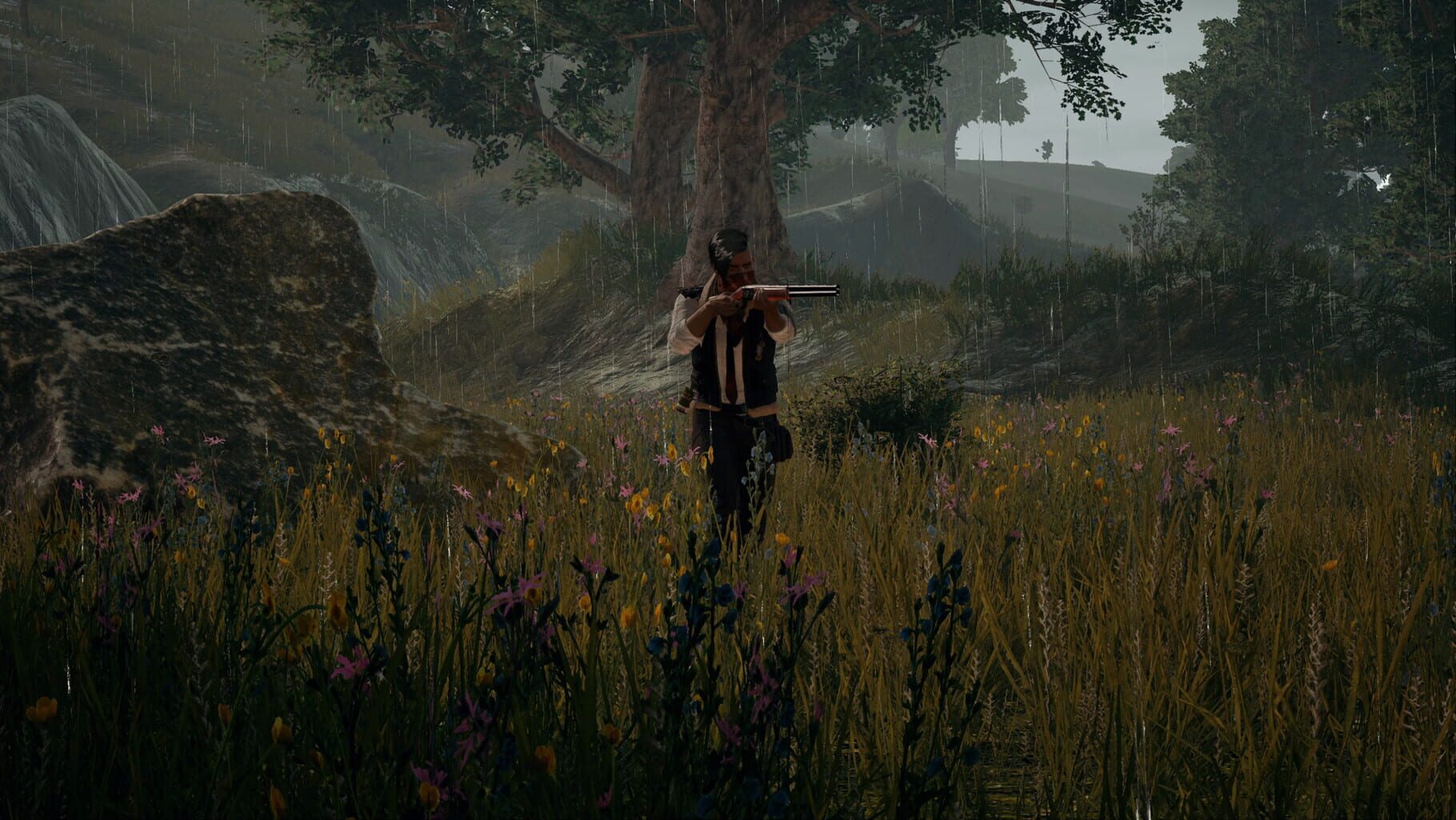
PUBG BATTLEGROUNDS Attachment Guide: Building the Perfect Loadout
How to pick the right muzzle, scope, grip, stock, and mag for PUBG guns, with best loadouts for ARs and DMRs.
A naked M416 sprays into the wall behind your target once the other guy gets past 50 meters or so. Bolt on a compensator, a grip, a stock, and an extended mag, and that same rifle stays glued to a moving chest well past 100. Nothing about the gun itself changed. You just gave it the parts that make it usable, and that gap is basically the whole game. In PUBG the attachments tend to decide more fights than the base weapon does, so worry less about which gun to keep and more about what you hang off the one you've got. The parts beat the name stamped on the receiver nine times out of ten.
Muzzle Attachments and When to Use Each
The muzzle is the single biggest recoil slot you have, and for automatic rifles the answer is almost always the compensator. The three you will see most are the compensator, the flash hider, and the suppressor, and each one does a different job. Muzzles come sized to the weapon too, so an AR compensator will not fit your SMG and a sniper compensator is its own item entirely.
The Compensator
The compensator is the recoil workhorse. It cuts vertical and horizontal kick and settles the gun down mid-spray, which is exactly what you want on a full-auto rifle. If you only grab one attachment while clearing a building, make it this one. The recoil reduction is small on paper, a few percent here and there, but you feel it the second a fight drags past the first five bullets. On a hard-kicking gun like the Beryl M762 it is pretty much mandatory, because that rifle will walk clean off target without help.
Take it first, every time, on any gun that climbs.
The Flash Hider
This is the underrated one. The flash hider trims a little recoil (a bit less than the compensator) and, more importantly, kills most of your muzzle flash. That flash matters way more than people give it credit for. Once the circle gets small and the lobby thins out, the gun firing a giant strobe in the bushes is the one everyone turns and shoots at. You can pull down on recoil with your mouse or stick. You can't manually hide your own flash. So plenty of experienced players run the flash hider in the late game over the compensator, accepting a tiny bit more kick so they don't broadcast their position to half the map.
The Suppressor
The suppressor is the cool-looking one and the one newer players overrate. It does not reduce recoil in any meaningful way on a spray weapon. What it does is quiet the shot, which keeps you off the nearby enemies' minimap, and it wipes almost all of the muzzle flash. For sniping, flanking, or third-partying a fight across a compound, that stealth is gold. For a flat-out rifle duel at 40 meters, you gave up your compensator for nothing and your gun kicks harder than the other guy's.
One small quirk worth knowing. A suppressor slightly tightens bullet spread, which helps a touch with hip-fire and that first aimed shot. Not enough to pick it over a compensator for a straight gunfight, but it isn't useless.
So when does the suppressor earn its slot? Mostly when staying hidden is the whole point, like pushing a squad from the side or picking people off at range. The rest of the time, you just want the compensator.
There is a fourth, rarer muzzle called the muzzle brake, also pitched at recoil control. In practice nobody bothers with it. The compensator and flash hider cover the job better, so you can safely ignore it.
| Muzzle | Recoil help | Muzzle flash | Sound | Best for | |---|---|---|---|---| | Compensator | Best of the three | Slightly reduced | Normal | Full-auto rifles, every duel | | Flash Hider | A little less than the comp | Mostly hidden | Normal | Late game, not getting spotted | | Suppressor | Almost none | Hidden | Very quiet | Sniping, flanking, third-partying |
Scope Choices by Engagement Range
A scope you can't use at your fighting range is dead weight. PUBG fights happen at all kinds of distances depending on the map and where the zone pulls, so you match the magnification to the job. One hard rule from the game itself: assault rifles are capped at a 6x. The big 8x is sniper and DMR territory only.
Red dot and holographic for close range
For fights inside about 50 meters, which is most of what you run into in towns and compounds, a red dot or holographic is all you need. Both are 1x sights that keep your full field of view and let you snap from hip to aim fast. The red dot is a clean single dot if you like a tidy sight picture. The holographic gives you a wider reticle inside a ring, which some find easier for tracking a moving target. It is pure preference, so pick whichever your eye likes.
Grab a canted sight too if you run a magnified scope on the same gun, so you can flip to a 1x the moment someone rushes you.
The 2x, 3x, and 4x for mid range
The 4x ACOG is the go-to mid-range AR scope. From about 50 meters out to roughly 150, it gives you enough zoom to place headshots without eating your awareness, and the reticle has built-in rangefinder marks that help with bullet drop on the harder-kicking calibers.
The 3x is a lighter, brighter option with an illuminated reticle, handy on maps with tricky lighting. The 2x Aimpoint sits between the red dot and the 3x, an aggressive do-everything optic for the early game when better scopes are scarce. Most players ditch it the second they find a 3x or 4x.
The 6x and 8x for long range
This is where it gets interesting. The 6x scope is the community favorite, and for good reason: you can dial its magnification down to 3x with a button press. That single trick makes it the most flexible scope in the game. Run it at 6x for poking at 200-plus meters, flick it down to 3x when the fight closes in, and never swap optics. A 6x on an M416, dialed to the 3x setting, is about as close to a perfect all-around setup as you will find.
The 8x CQBSS is extreme-range only and bolt-action sniper territory (Kar98k, M24, AWM, Mosin). Through 8x zoom, tracking a moving target up close is nearly impossible, and the scope sway punishes you hard without a cheek pad to steady it. DMRs can mount an 8x, but most players run a 6x on them instead, because 8x on a semi-auto gives you too much zoom and too much sway for the ranges you fight at.
A rough range guide (fights are messy, so treat these as a feel guide and not a hard cutoff):
| Scope | Typical range | Notes | |---|---|---| | Red dot / Holographic | 0 to 50m | Fastest target acquisition | | 2x Aimpoint | 25 to 75m | Early-game filler | | 3x Backlit | 50 to 150m | Bright, solid mid pick | | 4x ACOG | 75 to 200m | The AR workhorse | | 6x (or dialed to 3x) | 100 to 300m+ | Most flexible, top pick | | 8x CQBSS | 300m+ | Snipers only |
Grip and Stock Combos for Recoil Control
After the muzzle, the lower rail (the grip) and the stock are where recoil gets tamed. Grips tune how the gun kicks and how fast you re-aim. Stocks settle the recovery between shots. Get both right and a rough gun turns soft.
The grip lineup
PUBG has more grips than any other slot, and they are real tradeoffs rather than a strict ranking from best to worst.
- Vertical foregrip cuts vertical recoil, the up-and-down climb. This is the default pick for full-auto spraying, because most rifles climb more than they sway. If you hold the trigger down a lot, this is your grip.
- Angled foregrip trims horizontal recoil and speeds up your aim-down-sights time. Good for burst-firers and tap-shooters who want that first shot on target fast.
- Half grip reduces both vertical and horizontal recoil plus the recovery time between shots. It is the balanced all-rounder, the safe pick when you can't decide. A lot of players swear by it on the ACE32 and the Beryl.
- Light grip (sometimes called the lightweight grip) speeds up recoil recovery but adds a little recoil per shot. Best on DMRs where you tap, reset, and tap again.
- Thumb grip is niche. Less vertical recoil, but more horizontal and a slower recovery. Skip it unless nothing else is around.
- Laser sight isn't a recoil part. It tightens hip-fire spread, which matters for SMGs and panic range. Worth a slot if you hip-fire a lot.
Not every gun takes every grip, by the way. Bullpup rifles and a few others restrict the list.
The real debate is vertical versus half. If your problem is the gun climbing off the target, go vertical. If the muzzle wanders side to side as much as it climbs, go half. Both are good, and people argue about it constantly, which should tell you it comes down to how you shoot.
Stocks: tactical, heavy, and cheek pad
The stock is the quiet upgrade new players skip. On automatic rifles and SMGs you have two real choices now: the tactical stock and the heavy stock.
The tactical stock improves stability and shot recovery and speeds up your ADS a touch. It shines when you are firing single shots or tapping. The heavy stock is the newer option, buffed a while back in patch 31.1 to give about 10% more vertical and 10% more horizontal recoil control, and it is built for burst fire. A rough way to split them: tactical for tapping and fast ADS, heavy for short controlled bursts.
Important catch here. The AKM has no stock slot at all. You literally can't smooth its recovery the way you can an M416's, which is a big part of why the AKM feels rougher than its 7.62mm cousins even though it hits hard.
For DMRs and sniper rifles the stock slot is a cheek pad (on the SKS, SLR, Mk14, QBU, and all the bolt snipers like the Kar98k and AWM). The cheek pad cuts vertical recoil by about 20%, scope sway by about 15%, and softens the recoil animation by another 20%. On a tap-fired DMR that is the difference between your second and third shots landing or sailing clean over the target's head. The Mini-14 and Mk12 are the odd ones out, they take a tactical stock instead.
Bolt-action snipers can also run bullet loops in that slot for a faster reload, which some players prefer on the Kar98k and Win94 since those cycle slowly anyway.
Putting grip and stock together
For a full-auto rifle, pair a vertical or half grip with a tactical or heavy stock and you have a gun that holds a stream on target. For a DMR, a light grip plus a cheek pad keeps your follow-up shots tight. The two slots work together, so don't leave one empty just because the other is already good.
Extended Mags vs Quickdraw Tradeoffs
The magazine slot does two jobs: more bullets, and faster reloads. The best mag does both at once. There are three flavors to know.
The three magazine types
- Extended mag adds rounds to your magazine and nothing else. On an M416 that is 30 up to 40. On a Beryl, 30 up to 40. More bullets in the gun before you have to reload.
- Quickdraw mag keeps the normal round count but reloads faster, about 30% faster in most cases. You get back into the fight quicker, but with the same small magazine.
- Extended Quickdraw mag does both, a bigger magazine and a faster reload. This is the best-in-slot and the one you always want if you can find it.
Why extended usually wins
If you have to pick between a plain extended and a plain quickdraw, take the extended almost every time. The reason is simple. A lot of PUBG fights come down to who runs dry first. Two players spraying at each other across a rock, the one with 40 rounds keeps shooting while the other is mid-reload, and that is that. Extra capacity wins the fights that go long. A faster reload only helps between fights, when you usually have a second to top up anyway.
The quickdraw has its moments though. On an aggressive close-range SMG build where you are pushing and reloading constantly, the faster reload keeps your momentum. On a sniper or DMR where the magazine is tiny and every reload is a liability, faster reloads matter more. But for a workhorse rifle, capacity beats reload speed nine times out of ten.
One note on sniper mags. The high-end quickdraw mags for care-package snipers (the AWM and the like) only come from the care package itself, so you won't find those lying on the ground. Regular extended and quickdraw mags for bolt snipers and DMRs do spawn normally though.
Hunt the extended QuickDraw mag first. If it isn't around, grab the extended mag and don't feel bad about skipping the plain quickdraw. More rounds in the tube is the upgrade that saves your life in a sustained fight.
Best Attachment Sets for AR and DMR Builds
This is where it all comes together. Two builds cover most situations you'll meet, a do-everything AR and a long-range DMR. Run one of each and you are set for whatever the circle throws at you.
The all-around AR build (M416)
The M416 is the gold standard here because it has the most attachment slots of any rifle (five) and turns into a laser when fully kitted. The build:
- Muzzle: Compensator. Flash hider if the compensator isn't around, or for the late game when you'd rather not flash.
- Grip: Vertical or half. Vertical if it climbs, half if you want everything smoothed out.
- Stock: Tactical or heavy. The M416 takes both now.
- Magazine: Extended QuickDraw (30 up to 40 rounds).
- Scope: Red dot or holographic for pushing, a 4x for mid-range, or a 6x dialed to 3x if you want one optic for everything.
A fully built M416 holds full-auto fire on target past 100 meters, which is borderline absurd for an automatic rifle. That stability is why most players reach for it over the harder-hitting options.
The high-damage AR build (Beryl M762 and AKM)
If you want raw damage per second and can handle the kick, the Beryl M762 is the pick. It has the same slot layout as the M416 but hits harder and kicks a lot more, so the priorities shift hard toward recoil control.
- Muzzle: Compensator, non-negotiable. A Beryl without one is a real handful.
- Grip: Vertical or half, same logic as the M416.
- Stock: Heavy stock for bursts, or tactical for tapping.
- Magazine: Extended QuickDraw.
- Scope: Keep it modest, a red dot up to a 3x. The Beryl's recoil makes a 4x spray painful.
The AKM is the other 7.62 option. It hits like a truck and has the simplest needs because it has no stock slot and takes fewer grips. Run a compensator, an extended mag, and a red dot or 3x, and lean on single shots. The AKM is less forgiving than the M416 but it shreds up close.
The DMR build (Mini-14, SKS, SLR)
For long-range pokes you want a DMR. They take AR grips and mags plus their own optics and stock, so they share a lot of your loot pool.
- Muzzle: Compensator or flash hider. On a DMR the flash hider is totally fine since you are tap-firing rather than spraying.
- Grip: Light grip for tap-firing and fast recovery. Thumb or vertical if the light isn't around.
- Stock: Cheek pad on the SKS, SLR, and Mk14. Tactical stock on the Mini-14 and Mk12.
- Magazine: Extended QuickDraw. DMR mags are small, so every extra round counts.
- Scope: 4x or 6x. A 6x dialed down toward 4x is ideal for the 150 to 250 meter fights a DMR is built for.
The Mini-14 is the friendly DMR, fast fire rate, low recoil, a big magazine. The SKS and SLR hit harder but kick more, so the cheek pad and a light grip matter more on them. Tap, let the muzzle settle, then tap again. Spamming a hard-kicking DMR just puts your second shot over the target's head.
Looting priority
When you are sweeping a building with the timer ticking, grab parts in roughly this order:
- Muzzle (compensator). The biggest single recoil reduction you can bolt on.
- Grip (vertical or half). Tightens the spray and your first shot.
- Stock (tactical or heavy). Stability and recovery, on the guns that take one.
- Magazine (extended QuickDraw). More bullets and faster reloads.
- Scope. Red dot or 4x for the AR, 6x for the DMR.
That order bends if you have no sight at all. Grab a scope first in that case, since you can't aim without one. But all else equal, recoil control comes first, because uncontrolled recoil is what loses you the fight.
And the thing worth repeating: a looted compensator on the rifle you already have is a bigger upgrade than dropping that rifle for a shinier gun you can't kit. Loot for the parts that make your current weapon work. A fully built M416 beats a naked Beryl almost every time.