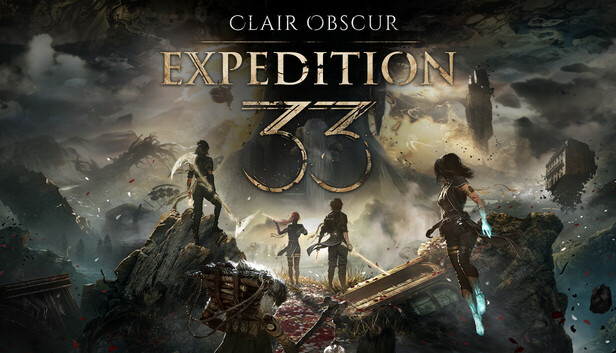
Clair Obscur: Expedition 33 Endgame Guide: Post-Game Bosses and Secrets
Expedition 33's post-game explained: the Chromatic superbosses, the Endless Tower, party builds, Lumina farming, and New Game Plus.
So you've rolled credits, or you're close to it. Clair Obscur: Expedition 33 doesn't just stop once the Paintress goes down. The back third of the game pulls the curtain back on the whole story, the real villain steps up, and a fat chunk of optional fights opens up across the Continent. The endgame here is less about one big dungeon and more about a scatter of brutal optional bosses, a tower you can grind for hours, and a New Game Plus mode that lets you carry your whole kit into a tougher run. Below: the path to the true final fight, where the superbosses live, the party setups that actually hold up, how to farm the rare upgrade drops, and what changes when you start the whole thing over.
Unlocking the True Final Boss Path
The "final boss" most players expect is the Paintress, Aline Dessendre. Beating her is the climax of the main story. She's not really the end of the threat, though. The true antagonist all along has been Renoir, her husband, and his plan is to drag his family out of the painted world (the Canvas) and then wipe the whole thing clean.
Renoir shows up early, slaughtering members of Expedition 33 at Dark Shores in Act I, and you cross blades with him more than once before the dust settles. The fan wiki logs three fight locations for him across the late game: Stone Wave Cliffs, Old Lumiere, and finally The Monolith. That last one is the true final fight, and it drops Renoir's Suit when you win. (He's voiced by Andy Serkis, if you were wondering why the performance lands so hard.)
What stands between you and The Monolith
After the Paintress, the late game sends you through Old Lumiere and out toward The Monolith, the surreal endgame zone where the family drama finishes playing out. You don't strictly have to chase every side activity to reach Renoir, but skipping them usually means showing up under-leveled and under-geared, and that fight punishes both hard.
What to bring
- A party in the high levels, close to the cap. Renoir hits like a truck and his later phases throw big damage checks at you, so a level deficit turns into a wipe fast.
- Clean parry and dodge timing. Like every major fight in the game, perfect inputs drive your damage through the AP and Gradient systems. Whoever you run as your carry, Renoir is a fight where sloppy timing gets you killed.
- Fully upgraded weapons and Luminas. Sink your Chroma Catalysts into your best gear before you walk in (more on farming those below).
- Healing and shielding loaded and ready. Tree of Life on Lune and Sanctuary on Monoco both buy you breathing room when a phase transition catches you off guard.
Think sustained damage and survival here, not one-shot burst. Renoir is a multi-phase endurance test, and parties built to blow up a single health bar often run out of gas in the back half.
Optional Superboss Locations and Requirements
The bulk of the optional endgame fights are the Chromatic Nevrons. These are pumped-up, glowing versions of the regular enemy types, scattered across the Continent and the late zones. There are roughly twenty of them, and they're the closest thing the game has to a superboss roster. Each one guards a rare drop, usually a unique Lumina plus a Colour of Lumina and a Chroma Catalyst.
Where to find them
Here's a table of the ones with confirmed locations, weaknesses, and drops on the fan wiki:
| Superboss | Location | Weak to | Notable Drops | |---|---|---|---| | Chromatic Abbest | Abbest Cave (also Endless Tower, Stage 3 Trial 3) | Light, Dark | First Offensive, Resplendent Chroma Catalyst, Colour of Lumina | | Chromatic Lancelier | Spring Meadows (also Endless Tower, Stage 8 Trial 2) | Ice | Augmented Attack | | Chromatic Évêque | Flying Manor (also Endless Tower, Stage 7 Trial 1 and Stage 9 Trial 3) | Ice | Cleansing Tint, Recoat, Chroma Catalyst | | Chromatic Portier | Floating island northeast of Lumiere, Act III (also Endless Tower, Stage 10 Trial 1) | Fire | Anti-Blight, Grandiose Chroma Catalyst, Colour of Lumina | | Chromatic Bourgeon | The Monolith (Tainted Waters) | Lightning | Bourgelon, Resplendent Chroma Catalyst, Colour of Lumina |
That's five, but the full roster runs close to twenty. You'll also bump into Chromatic versions of the Échassier, the Aberration, the Ballet, the Boucheclier, the Braseleur, the Chalier, the Contorsionniste, the Démineur, the Danseuse, the Duolliste, the Glaise, the Luster, and a few others. The deal is the same for all of them: track the thing down in its corner of the map, match your elements to its weakness, and cash the drops.
A quick note on the weaknesses column: it matters more than it looks. Hitting a Chromatic boss with its weak element is the difference between a ten-minute slog and a clean kill, so set up your party's elements before you walk in rather than after.
Clea and the Painter fights
The standout superboss outside the Chromatic lineup is Clea Dessendre. She's a Painter, Renoir and Aline's eldest daughter, and the lore goes out of its way to call her the most skilled one in the family, the only person skilled enough to paint over another Painter's work. ("She who controls chroma, controls the Canvas," is her line.) In gameplay terms, that reputation translates to one of the hardest optional fights in the game. If you've cleaned out the Chromatic circuit and want something nastier, Clea is the next step up, and she's the fight most completionists remember.
The Endless Tower
A lot of the Chromatic bosses also show up inside the Endless Tower, a post-game challenge gauntlet split into Stages, each with multiple Trials. Confirmed boss appearances run at least as far as Stage 10. The Tower is your repeatable farm: even after you've cleared a superboss out in the overworld, you can re-fight it here on rotation to keep pulling its drops, which matters a lot for the farming loop in the next section.
Best Post-Game Party Compositions
Gustave leaves the party partway through the story, so your post-game roster is Lune, Maelle, Sciel, Verso, and Monoco. You run three at a time in combat with a fourth swappable in reserve, so the real question is which three and what roles they're playing.
What each member actually does
- Lune is your elementalist. She generates and spends elemental "Stains" to power her skills, which makes her a flexible caster who can swing between healing and damage depending on the Stain setup she's running. Gradient Attacks: Tree of Life (a big heal) and Sky Break (raw damage).
- Maelle is the headline damage dealer. She cycles through stances, building from a defensive baseline up to her highest-damage offensive mode, and her numbers ramp hard when you chain the rotation cleanly. She's a glass cannon, though, so she folds fast if you don't parry or shield her through the return hits. Gradient Attacks: Phoenix Flame and Gommage.
- Sciel applies "Foretell" stacks to enemies and then spends them for either burst damage or healing. That makes her a solid hybrid who can flex into a support slot when a fight calls for it. Gradient Attacks: Doom and End Slice.
- Verso runs on a "Perfection" meter that fills when you parry, dodge, and land hits cleanly. Higher Perfection ranks unlock stronger bonuses, so he rewards good inputs more than any other member. He's your pick when your timing is sharp, and a liability when it isn't. His Gradient Attacks unlock through Esquie's relationship levels rather than his own, which is a quirk worth remembering.
- Monoco shapeshifts into Nevrons and rotates a "Bestial Wheel" every turn. Land a skill that matches the wheel's current slot and you get a bonus effect tacked on. He's the most flexible slot in the game, able to cover damage, shielding, or support depending on which Nevron form he's riding. Gradient Attacks: Sanctuary (a big shield and heal) and Break Point.
Sample loadouts
- Raw damage party: Maelle (carry) plus Verso (parry engine) plus Monoco (flex). You burn things down fast and lean on Monoco for shields whenever Maelle dips low. Risky into bosses that hit her weakness, but the fastest clear when it works.
- Safe endurance party: Lune (heals and Stains) plus Sciel (Foretell hybrid) plus Maelle (DPS). Lots of sustain, good for the long superboss fights where burst parties wipe to a bad phase transition.
- Skill party for the Endless Tower: Verso plus Monoco plus Sciel. Clean inputs carry this comp, and all three flex enough to handle the varied fights the Tower throws at you across its Stages.
A quick word on the reserve slot: it matters more than people give it credit for. Keep someone in the back who can cover whatever your front three are weak to. If Maelle's carrying and a boss loves hitting her element, swap in Verso to eat the burst and swap her back when the window opens.
Farming Rare Luminas After the Story
There are three upgrade resources you'll care about in the endgame, and the names are easy to mix up, so here's the quick rundown before the farming loop.
- Chroma is the base resource, the magical substance the whole painted world is built out of. You spend it on all kinds of upgrades, and you'll always want more.
- Colours of Lumina are the items you use to upgrade your Luminas, the passive skills you slot onto each character. They're the rare, limited currency that bottlenecks your build.
- Chroma Catalysts come in tiers (Resplendent, Grandiose, and a few others), and they're what you sink into weapons to level them up. The higher-tier Catalysts only drop from harder sources.
The Chromatic farming loop
The cleanest way to pull rare Luminas and Colours of Lumina is to hunt the Chromatic Nevrons. Each one drops a specific, often unique Lumina plus a Catalyst and usually a Colour of Lumina. The drops are tied to the boss, so if you want Anti-Blight, you go fight the Chromatic Portier on its floating island northeast of Lumiere. If you want First Offensive, you head to Abbest Cave. The mapping is consistent, which makes targeting efficient.
Because the Chromatic bosses reappear inside the Endless Tower, you don't have to wait on overworld respawns to keep farming them. Run the Tower, hit the Trials where your target boss shows up, and repeat. Here's the drop table for quick reference:
| Target Drop | Farm from | Where | |---|---|---| | First Offensive | Chromatic Abbest | Abbest Cave / Endless Tower Stage 3 Trial 3 | | Augmented Attack | Chromatic Lancelier | Spring Meadows / Endless Tower Stage 8 Trial 2 | | Cleansing Tint, Recoat | Chromatic Évêque | Flying Manor / Endless Tower Stage 7 Trial 1, Stage 9 Trial 3 | | Anti-Blight | Chromatic Portier | Floating island NE of Lumiere / Endless Tower Stage 10 Trial 1 | | Bourgelon | Chromatic Bourgeon | The Monolith (Tainted Waters) |
What to prioritize
If you're only going to farm a few of these, aim for the bosses that drop Colours of Lumina and the Resplendent or Grandiose Catalysts. Abbest, Portier, and Bourgeon all hand those over. The unique Luminas themselves (First Offensive, Anti-Blight, Cleansing Tint) are worth grabbing for specific builds, but the Catalysts and Colours are what actually unblock your weapon and skill upgrades across the whole roster, so they're the bigger payoff for your time.
The Tower is also the best Chroma farm in the game, full stop. Run Trials on repeat, break down or sell anything you don't need, and you'll bank more Chroma per hour than the overworld ever gives you. For a party that's still mid-build, that steady Chroma income is what finishes off your upgrades.
New Game Plus Changes and Rewards
New Game Plus is in the game (it's confirmed across the guides and the Wikipedia summary), and the short version is that you replay the story at a higher difficulty while keeping everything you already built. The mode lets you carry your full progression into a tougher version of the campaign.
What carries over
Your character progression comes with you. That means levels, Luminas, Pictos, weapons, and items all ride over to the new run. Relationship levels and unlocked Gradient Attacks come too, so you're not re-grinding Esquie or re-unlocking Verso's big moves from scratch. Put simply, you start run two already loaded out rather than back at square one, which is the whole appeal.
What's new
- A steeper difficulty curve. Enemies hit harder and have more health, which is the main reason to bother if the base game stopped scaring you somewhere in Act II.
- A second pass at the story. Clair Obscur's plot lands differently once you know the Canvas twist, and NG+ lets you sit with the early scenes knowing exactly where they're going. A lot of the dialogue hits harder the second time.
- Fresh outfits. Sandfall rolled out a free "major" content update around the 5-million-copies milestone in late 2025 that added a new location, more late-game bosses, and new character costumes. Make sure you've grabbed that update before you start NG+ if you want the full package on the new run.
Is it worth it
Honestly, yes, if you liked the combat. The fight system is the real draw of Clair Obscur, and NG+ is where a fully built party gets to cut loose against tougher versions of everything. If you're more of a one-and-done story player, the superbosses and the Endless Tower already give you a meaty endgame without replaying, so NG+ is genuinely optional rather than required.
One practical closer: knock out the superbosses and the Tower on your first run if you care about completion at all. You can absolutely do them in NG+ too, but tackling them while the content is still fresh is the more fun way to play it, and a lot of those rare Lumina drops will make your NG+ opening hours way smoother.